Cerveau
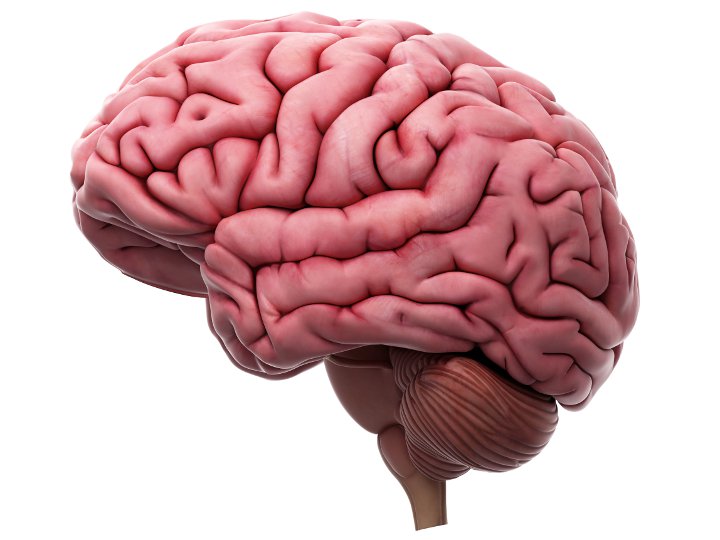
Brain is a soft tissue contained in the skull of vertebrates.
À propos de ce matériau
Le cerveau est un tissu mou contenu dans le crâne des vertébrés. Il est très hétérogène car il contient à la fois la matière blanche et la matière grise qui ont des comportements mécaniques différents. Les méthodes de tests couramment utilisées pour le tissu cérébral sont le cisaillement dynamique, la tension, la compression et l’indentation. Le cerveau peut être testé mécaniquement tel quel, ou par des échantillons séparés pour la modélisation constitutive du tissu cérébral. Une connaissance complète des propriétés mécaniques du tissu cérébral est nécessaire pour relier la réponse mécanique du tissu aux dommages réels. De plus, des informations précises sur les propriétés des tissus permettront de mettre en œuvre une analyse par éléments des modèles de tissus cérébraux. Des tests mécaniques du cerveau sont effectués pour en apprendre davantage sur sa réaction aux blessures, à la chirurgie et aux pathologies. De plus, il est nécessaire de mesurer les propriétés mécaniques du tissu cérébral avec précisions pour faciliter le développement d’outils chirurgicaux automatisés, de robots et de systèmes de formation chirurgicale.
Configurations de test (11)
Compression Non-Confinée
Indentation (Raideur)
Cartographie 3D d'épaisseur
Impact

Contrôle de la temperature
Capteurs analogues externes
Flux de caméra
Positionnement (manuel)
Positionnement (X Auto)
Positionnement (XY Auto)
Études de cas (3)
Ressources associées (3)
Littérature associée
A Needle Biopsy-Inspired Method for Rapid Mechanical Characterization of Soft Tissue
Zhaokai Wang; Syed Ali Raza Bukhari; Tiffany Yu; Diancheng Li; Matthew A. Robertson; Andrew Giles; Jamie Purzner; Yong Jun Lai; Xian Wang
IEEE Transactions on Automation Science and Engineering, vol. 23, pp. 13703-13711, Published: 23 July 2026
0 citations · 0 en 2025–2026
Investigating the Regional, Directional, and Rate-Dependent Mechanical Response of Fixed Human Brain Tissue Under Compression
Alejandro Matos Camarillo; Michael Baggaley; Karyne N. Rabey; James D. Hogan; Dan L. Romanyk
Journal of Biomechanical Engineering. 2026;148(5):051003. DOI:10.1115/1.4070588. Version-of-record online 2026-01-08. Methods provenance:Camarillo2024MSc thesis chapter3;multiple own-study experimental findings match published abstract. Not an explicit reprint;final journal methods not independently read.
1 citation · 1 en 2025–2026
An attempt to identify brain tumour tissue in neurosurgery by mechanical indentation measurements
Isabelle Skambath; Jessica Kren; Patrick Kuppler; Steffen Buschschlueter; Matteo Mario Bonsanto
Acta Neurochir 166, 343 (2024), Published: 21 August 2024
9 citations · 8 en 2025–2026
Mechanical characteristics of glioblastoma and peritumoral tumor-free human brain tissue
Jessica Kren; Isabelle Skambath; Patrick Kuppler; Steffen Buschschlüter; Nicolas Detrez; Sazgar Burhan; Robert Huber; Ralf Brinkmann; Matteo Mario Bonsanto
Acta Neurochir 166, 102, Published: 23 February 2024
14 citations · 11 en 2025–2026
Optical Measurement of Directional, Regional, and Strain Rate Dependent Mechanical Properties of Human Brain Tissue under Uniaxial Compression
University of Alberta, A thesis submitted in partial fulfillment of the requirements for the degree of Master of Science, Graduation date: Spring 2024
Characterization of the chemical and mechanical properties of porcine brain tissue in vitro
A Thesis Submitted to the Faculty of Purdue University In Partial Fulfillment of the Requirements for the degree of Master of Science in Biomedical Engineering, Published: May2023
Development of a Detailed Finite Element Model of the BIPED and Verification of Fidelity in Two Cases of Blunt Impact
A thesis submitted in partial fulfillment of the requirements for the degree of Master of Science Department of Mechanical Engineering University of Alberta, Published: 2023
Dynamic changes in mechanical properties of the adult rat spinal cord after injury
Chen Jin; Rui Zhu; Zhan-wei Wang; Yi Li; Hao-fei Ni; Meng-lei Xu; Liang-dong Zheng; Yu-ting Cao; Yi-ting Yang; Wei Xu; Jian-jie Wang; Ning Xie; Li-ming Cheng
Acta Biomaterialia, 2022, ISSN 1742-7061, Published: 23Nov2022
26 citations · 18 en 2025–2026
Effect of Chitosan on Alginate-Based Macroporous Hydrogels for the Capture of Glioblastoma Cancer Cells
Caroline Safi; Angela Giraldo Solano; Benoit Liberelle; Hélène Therriault; Lisa Delattre; Melek Abdelkhalek; Changsheng Wang; Simon Bergeron-Fortier; Vaiana Moreau; Gregory De Crescenzo; Nathalie Faucheux; Marc-Antoine Lauzon; Benoit Paquette; Nick Virgilio
ACS Appl. Bio Mater. 2022, XXXX, XXX, XXX-XXX, https://doi.org/10.1021/acsabm.2c00598, Publication Date: August 10, 2022
15 citations · 7 en 2025–2026
Fluid-solid interaction in the rate-dependent failure of brain tissue and biomimicking gels
M. Terzano; A. Spagnoli; D. Dini; A. E. Forte
Preprint submitted to Journal of the Mechanical Behavior of Biomedical Materials February 23, 2021 https://arxiv.org/pdf/2102.11268.pdf
20 citations · 6 en 2025–2026
Shear-Deformation Based Continuum-Damage Constitutive Modeling of Brain Tissue
Mark T. Begonia; Alexander M. Knapp; R.K. Prabhu; Jun Liao; Lakiesha N. Williams
Journal of Biomechanics, 2021, 110260, ISSN 0021-9290, https://doi.org/10.1016/j.jbiomech.2021.110260
11 citations · 5 en 2025–2026
Defining the mechanical characteristics of porcine brain tissue subject to cyclic, compressive loading
Master of Science thesis, Biomedical Engineering, Mississippi State University, May 1, 2020.
Compressive Mechanical Properties of Porcine Brain: Experimentation and Modeling of the Tissue Hydration Effects
Raj K. Prabhu; Mark T. Begonia; Wilburn R. Whittington; Michael A. Murphy; Yuxiong Mao; Jun Liao; Lakiesha N. Williams; Mark F. Horstemeyer; Jianping Sheng
Bioengineering 2019, 6, 40; doi:10.3390/bioengineering6020040
18 citations · 4 en 2025–2026
Models and tissue mimics for brain shift simulations
Antonio E. Forte; Stefano Galvan; Daniele Dini
Biomech Model Mechanobiol (2018) 17: 249. https://doi.org/10.1007/s10237-017-0958-7
35 citations · 4 en 2025–2026
On the characterization of the heterogeneous mechanical response of human brain tissue
Antonio E. Forte; Stephen M. Gentleman; Daniele Dini
Biomechanics and Modeling in Mechanobiology. 2017;16(3):907-920. doi: 10.1007/s10237-016-0860-8 Online: 2016-12-08.
129 citations · 26 en 2025–2026
Soft Tissue Phantoms for Realistic Needle Insertion - A Comparative Study
Alexander Leibinger; Antonio E. Forte; Zhengchu Tan; Matthew J. Oldfield; Frank Beyrau; Daniele Dini; Ferdinando Rodriguez y Baena
Annals of Biomedical Engineering. pp 1-11 (2015)
82 citations · 12 en 2025–2026
A Novel Composite Phantom for Brain Tissue
A.E. Forte; S. Galvan; F. Manieri; D. Dini
EMBC2014, one-page conference contribution. Author-deposit DOI10.13140/2.1.1795.4560; no IEEE publisher DOI established.
Traumatic brain injury: modeling and simulation of the brain at large deformation
Mississippi State University. Ph.D. dissertation, Mechanical Engineering. 2011-08.
Review Paper: Fifty years of brain tissue mechanical testing: From in vitro to in vivo investigations
Simon Chatelin; André Constantinesco; Rémy Willinger
Biorheology 47 (2010) 255–276. DOI 10.3233/BIR-2010-0576
342 citations · 27 en 2025–2026
Structure-property relations of porcine brain tissue: strain rate and stress-state dependence
Mississippi State University. M.S. thesis, Biomedical Engineering. 2009-08.
Strain Rate Dependence in the Structure Property Relationship of Porcine Brain
Mark G. T. Begonia; Jun Liao; Mark F. Horstemeyer; Lakiesha N. Williams
Paper presented at the ASME 2009 Summer Bioengineering Conference. (2009)
0 citations · 0 en 2025–2026
FAQ
Qu'est-ce que la viscoélasticité?+
LAB MODULE – Torsion of Disk-Shaped Samples – Student Version
Qu'est-ce que l'élasticité?+
Module de laboratoire — Torsion de l’os
LAB MODULE – Unconfined Compression of Hydrogel Disks – Student Version