A.E. Forte; S. Galvan; F. Manieri; D. Dini
EMBC2014, one-page conference contribution. Author-deposit DOI; no IEEE publisher DOI established.
https://doi.org/10.13140/2.1.1795.4560
Les titres, résumés et légendes des publications sont présentés en anglais.
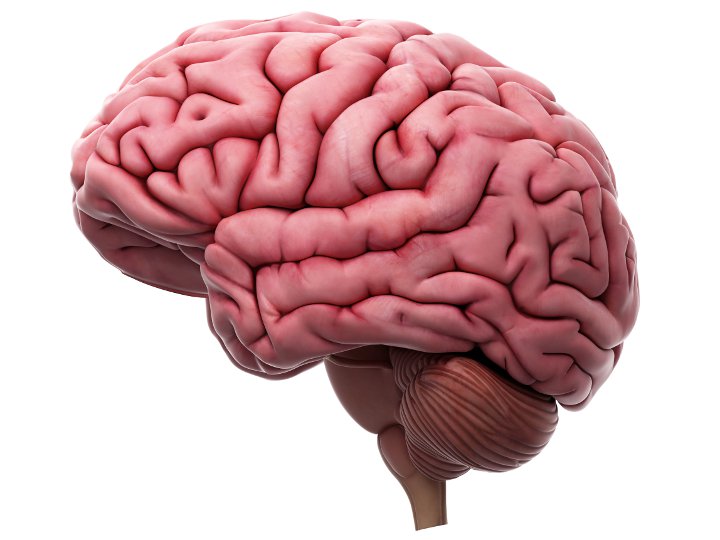
We present a phantom of the human brain, based on a novel composite hydrogel, suitable for reproducing the brain shift phenomenon and indentation procedures in a range of velocities spanning over two orders of magnitude. The gel is simple to prepare, widely available, inexpensive and it does not involve harmful components. Our results demonstrate how the combination of two very different hydrogels mutually balanced in a precise ratio produces a hybrid material that closely matches the experimental tests carried out on porcine brain tissue. By using the phantom molded into a realistic shape, a testing setup has been designed to reproduce the brain shift phenomenon, measure the deformation with different techniques and tune and evaluate a specific finite element (FE) model of the phantom.
Utilisation des équipements
Le Mach-1 de Biomomentum a servi à tester du cerveau porcin post-mortem et des matériaux synthétiques par compression non confinée, suivie de 500 secondes de relaxation. Une cellule de charge uniaxiale de 1,5 N mesurait la force verticale pour développer des hydrogels PVA-Phytagel reproduisant les propriétés mécaniques cérébrales.
Matériaux (3)


Configurations de test (2)
