Alejandro Matos Camarillo
University of Alberta, A thesis submitted in partial fulfillment of the requirements for the degree of Master of Science, Graduation date: Spring 2024
https://doi.org/10.7939/r3-95kg-5n87
Les titres, résumés et légendes des publications sont présentés en anglais.
Abstract
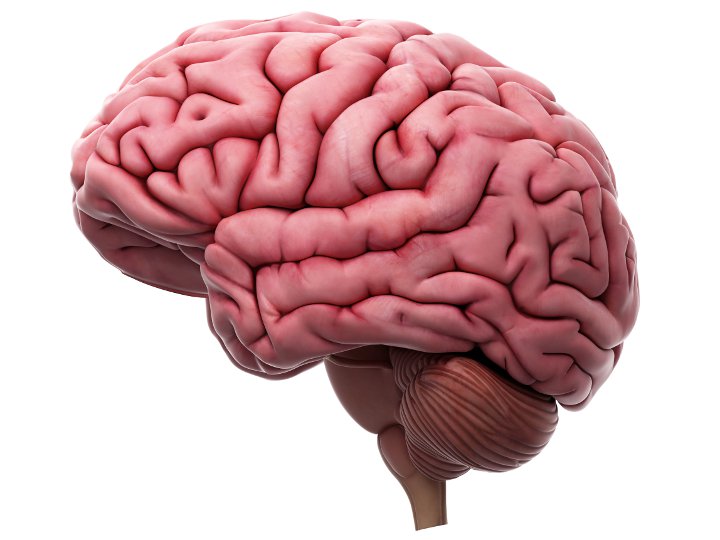
The brain is the most important central nervous system component, consisting of a complex network of neurons and glial cells essential for information processing, movement, and behavior control. It is encased within the skull and suspended in cerebrospinal fluid (CSF), but its low rigidity makes it susceptible to damage from mechanically induced trauma. It can be differentiated into gray and white matter, respectively composed of neuron cell bodies and myelinated axon fibers. The various regions of the brain contain differing proportions of these tissue types, adding to the overall complexity of the brain’s structure. While computational models have helped advance the development of diagnostic tools and the establishment of injury
thresholds, there still exist gaps in the understanding of the mechanical properties of human brain tissue under different loading conditions. The brain’s heterogeneous structure is believed to influence the variation in mechanical properties reported in biomechanics literature. This complexity challenges the investigation and modeling of brain tissue, which cannot be assumed homogeneous as previously thought. This thesis sought to address gaps in the brain mechanics literature by examining the mechanical behavior of human brain tissue under uniaxial compression loading. The analysis focused on the regional, directional, and strain-rate dependent variations in properties from a continuum mechanics experimental approach utilizing uniaxial
compression tests combined with Digital Image Correlation (DIC) to analyze the stress response and the deformation of human brain tissue samples at perpendicular planes of view. Tissues from two distinct brain regions were analyzed: the gray cortical matter of the temporal lobe and white matter from the corpus callosum, each subjected to various strain rates and magnitudes. In the corpus callosum, loading was applied parallel and perpendicular to the axon fiber orientation to study anisotropy due to the fiber orientation.
Experimental results demonstrated that the stress response of brain tissue increased with both strain rate and magnitude in all examined regions and loading directions. However, comparisons between regions revealed no differences in stress-stretch responses. Utilizing DIC to assess the transverse and axial strains of the samples during mechanical testing revealed that the Poisson’s ratio (PR) of the tissues changed with the stretch level, hence termed the Poisson Function (PF). The temporal lobe exhibited isotropic behavior, closely aligning with the behavior of a homogeneous incompressible material. In the corpus callosum, the differing PF behavior across planes of view and loading directions suggested a transversely isotropic response. The volume ratio investigations showed slight deviations from incompressible behavior with both strain rate and magnitude that can result in large stored
energy penalties due to the high bulk modulus of brain tissue.
This study addressed existing gaps in human brain tissue behavior at strain rates representative of trauma events in comparison to quasistatic strain rates. A key highlight of this work is the detailed investigation of the corpus callosum, examining its deformation characteristics in relation to its axon fiber orientation. This thesis provided insights into the PF evolution as a function of stretch that helps in understanding the anisotropy of brain tissue. Analyzing the volume ratio evolution provided insight into the compressibility of the tissue that is not attainable by analyzing the PR alone. Altogether, the observations from this thesis highlight the complex mechanics of brain tissue and provide evidence for the anisotropic behavior of white matter, and the importance of considering strain rate, and compressibility in future biomechanical modeling efforts.
Keywords
Biomechanics, Brain, Compression, Compressibility, Anisotropy, Poisson Function & Digital Image Correlation.
Utilisation des équipements
Le Mach-1 réalisait des essais de compression uniaxiale d’échantillons cérébraux humains avec mesure optique des déformations.
Matériaux (1)
Matériau
Cerveau
Configurations de test (3)

Configuration de test
Compression Non-Confinée

Configuration de test
Compression confinée

Configuration de test