Jacob T. Larsen
A Thesis Submitted to the Faculty of Purdue University In Partial Fulfillment of the Requirements for the degree of Master of Science in Biomedical Engineering, Published: May2023
https://doi.org/10.25394/pgs.22677769
Les titres, résumés et légendes des publications sont présentés en anglais.
Abstract
Traumatic brain injury (TBI) is characterized by a violent or sudden blow to the head that causes tearing or bruising of the brain tissue and its supporting blood vessels. Determination of the mechanical properties of gray and white matter is critical for the creation of computational models of healthy and TBI-damaged brain tissues. Current in vivo methods to characterize brain tissue, such as 3D amplified MRI (aMRI) and magnetic resonance elastography (MRE), are highly vulnerable to motion artifacts and have limited techniques to exert mechanical loads on the brain. Therefore, in vitro testing was employed to estimate the chemical composition of gray and white matter using Fourier Transform Infrared (FTIR) spectroscopy and the stress responses of the brain tissues to high compressive deformations via unconfined compression. Attenuated total reflectance (ATR) was run in conjunction with FTIR spectroscopy to eliminate the need for sample preparation. Unconfined compression of gray and white matter samples was performed to 70% of the total sample height at a constant strain rate of 0.35/s. Results showed significant increases in the absorbances of white matter (p < 0.05) in the characteristic lipid and carbohydrate regions of the FTIR spectra when compared to gray matter. Within the initial 10% toe-region of the stress-strain curve, white matter is observed to absorb significantly greater compressive loads (p < 0.05) than gray matter. These results indicate an incomplete characterization of brain tissue; therefore, additional in vitro and in vivo methods are still necessary, separately or in combination, to accurately characterize brain tissue mechanics in TBI and non-TBI patients.
Utilisation des équipements
La section de méthode mentionne un appareil Mach-1 et décrit des essais de compression.
Les détails du protocole sont conservés en anglais dans cette rubrique; consulter la publication originale pour le contexte expérimental complet.
Matériaux (1)
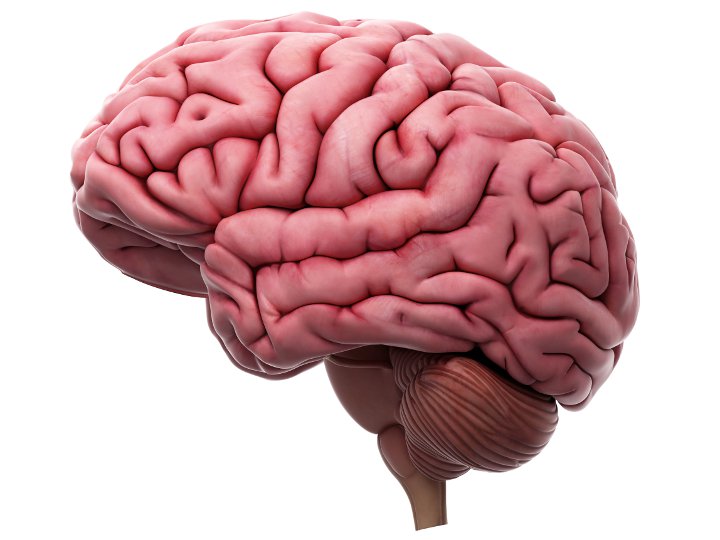
Cerveau
Configurations de test (1)
