M. Terzano; A. Spagnoli; D. Dini; A. E. Forte
Preprint submitted to Journal of the Mechanical Behavior of Biomedical Materials February 23, 2021 https://arxiv.org/pdf/2102.11268.pdf
https://doi.org/10.48550/arxiv.2102.11268
20 citations · 6 en 2025–2026
Les titres, résumés et légendes des publications sont présentés en anglais.
Abstract
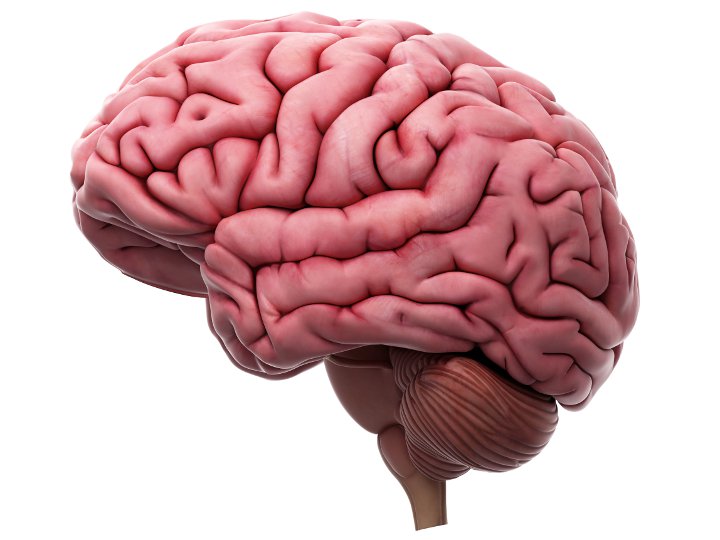
Brain tissue is a heterogeneous material, constituted by a soft matrix filled with cerebrospinal fluid. The interactions between, and the complexity of each of these components are responsible for the nonlinear rate-dependent behaviour that characterizes what is one of the most complex tissue in nature. Here, we investigate the influence of the cutting rate on the fracture properties of brain, through wire cutting experiments. We also present a model for the rate-dependent behaviour of fracture propagation in soft materials, which comprises the effects of fluid interaction through a poro-hyperelastic formulation. The method is developed in the framework of finite strain continuum mechanics, implemented in a commercial finite element code, and applied to the case of an edge-crack remotely loaded by a controlled displacement. Experimental and numerical results both show a toughening effect with increasing rates, which is linked to the energy dissipated by the fluid-solid interactions in the process zone ahead of the
crack.
All tests were performed with a Biomomentum Mach-1™mechanical testing system using a 1.5 N single- axis load cell, in a conditioned room at 19°C temperature (Forte et al., 2016).
Keywords: brain tissue; hydrogels; rate-dependent fracture; poroelasticity
Utilisation des équipements
Le Mach-1 réalisait des essais de coupe par fil sur du tissu cérébral et des gels biomimétiques pour étudier la rupture dépendante de la vitesse.
Article et documents
Document
Consulter l’article (PDF)
Matériaux (2)
Matériau
Cerveau
Matériau
Tissus mous (fantôme)
Configurations de test (1)

Configuration de test