Jessica Kren; Isabelle Skambath; Patrick Kuppler; Steffen Buschschlüter; Nicolas Detrez; Sazgar Burhan; Robert Huber; Ralf Brinkmann; Matteo Mario Bonsanto
Acta Neurochir 166, 102, Published: 23 February 2024
https://doi.org/10.1007/s00701-024-06009-x
14 citations · 11 en 2025–2026
Les titres, résumés et légendes des publications sont présentés en anglais.
Abstract
Background
The diagnosis of brain tumor is a serious event for the affected patient. Surgical resection is a crucial part in the treatment of brain tumors. However, the distinction between tumor and brain tissue can be difficult, even for experienced neurosurgeons. This is especially true in the case of gliomas. In this project we examined whether the biomechanical parameters elasticity and stress relaxation behavior are suitable as additional differentiation criteria between tumorous (glioblastoma multiforme; glioblastoma, IDH-wildtype; GBM) and non-tumorous, peritumoral tissue.
Methods
Indentation measurements were used to examine non-tumorous human brain tissue and GBM samples for the biomechanical properties of elasticity and stress-relaxation behavior. The results of these measurements were then used in a classification algorithm (Logistic Regression) to distinguish between tumor and non-tumor.
Results
Differences could be found in elasticity spread and relaxation behavior between tumorous and non-tumorous tissue. Classification was successful with a sensitivity/recall of 83% (sd = 12%) and a precision of 85% (sd = 9%) for detecting tumorous tissue.
Conclusion
The findings imply that the data on mechanical characteristics, with particular attention to stress relaxation behavior, can serve as an extra element in differentiating tumorous brain tissue from non-tumorous brain tissue.
Keywords
Brain tumor, Glioblastoma, Brain tissue, Elasticity, Relaxation, Neurosurgery & Biomechanics.
Utilisation des équipements
La section de méthode mentionne un appareil Mach-1 et décrit des essais de relaxation ou de fluage.
Les détails du protocole sont conservés en anglais dans cette rubrique; consulter la publication originale pour le contexte expérimental complet.
Matériaux (1)
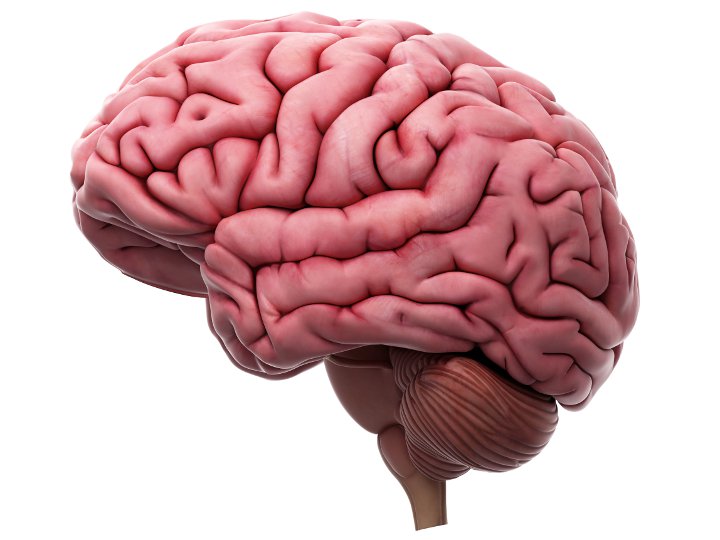
Cerveau
Configurations de test (3)

Compression Non-Confinée
