Mousse
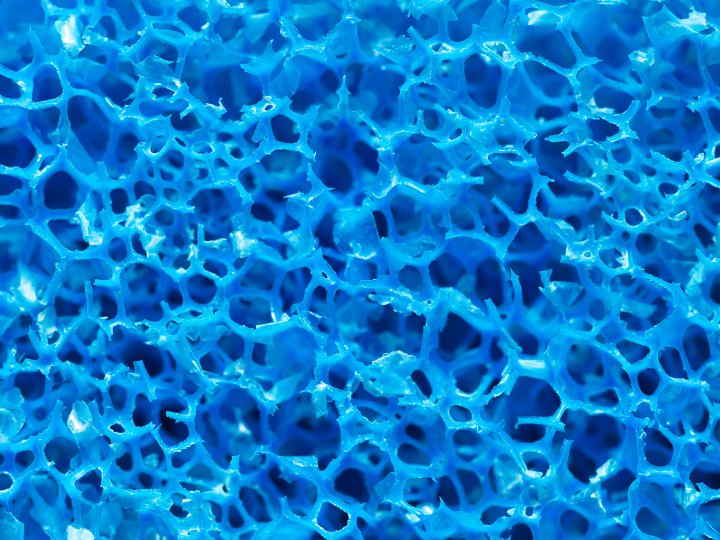
Foam is a soft porous material which can be made of metal, ceramic or polymer.
À propos de ce matériau
La mousse est un matériau poreux et mou qui peut être fait de métal, de céramique ou de polymère. Les propriétés mécaniques de la mousse sont évaluées pour différentes applications d’utilisation.
Configurations de test (11)
Tension
Compression Non-Confinée
Indentation (Raideur)
Cartographie 3D d'épaisseur
Torsion
Capteurs analogues externes
Flux de caméra
Positionnement (manuel)
Positionnement (X Auto)
Positionnement (XY Auto)
Études de cas (1)

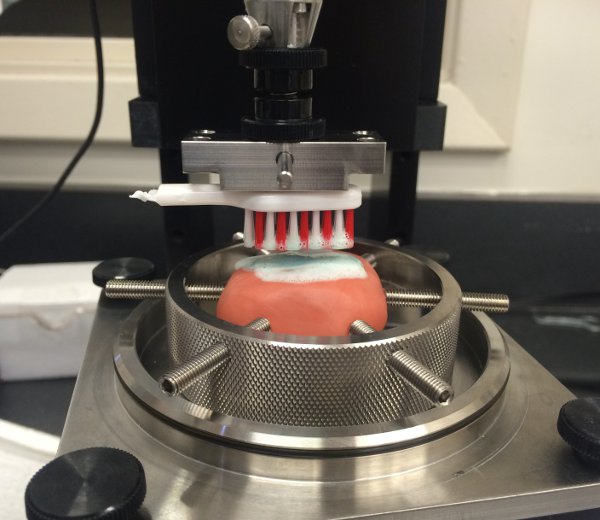
Évaluation de pâte à dents
Ressources associées (1)
Littérature associée
Microsphere‐Templated Conductive Syntactic Foams for Recyclable and Additively Manufactured Soft Electronics
Gayaneh Petrossian; Yassine Diouri; Bolan Xu; Sara Ebrahimi; Atharva Pande; Floriane Miquet‐Westphal; Hang Xu; Fabio Cicoira
Advanced Healthcare Materials. 2026;15(28):e71364.
0 citations · 0 en 2025–2026
PEDOT:PSS-Based Soft Materials for Wearable Bioelectronic Applications
Polytechnique Montréal. PhD thesis, 2026. Original abstract: English.
0 citations · 0 en 2025–2026
Development of an on-demand foaming printhead for biofabrication of constructs with heterogeneous porosity
Mohammadamin Zohourfazeli; Pakshid Hosseinzadeh; Elias Madadian; Sara Badr; Sophie Lerouge; Ali Ahmadi
Bioprinting. 2025.
0 citations · 0 en 2025–2026
Fabrication of Piezoelectric Structures with High Porosity by Digital Light Processing
Dongcai Zhang; Yaodong Yang; Xuhan Lv; Wei-Feng Rao
3D Printing and Additive Manufacturing, Mary Ann Liebert, Inc., publishers, Published Online: 30 Oct 2023
0 citations · 0 en 2025–2026
Printable, adhesive, and self-healing dry epidermal electrodes based on PEDOT:PSS and polyurethane diol
Pierre Kateb; Jiaxin Fan; Jinsil Kim; Xin Zhou; Gregory A Lodygensky; Fabio Cicoira
IOP Publishing Ltd, Flexible and Printed Electronics, Accepted Manuscript online 23 October 2023
27 citations · 13 en 2025–2026
Starch/Silicone Elastomers and Foams
Yang Chen; David A. Valentini; Michael A. Brook
Sustainability. 2023;15(13):9941
7 citations · 5 en 2025–2026
Using Phenolic Compounds as Crosslinkers for Aminosilicones: Preperation of Silicone Elastomers with Enhanced Sustainability
A Thesis Submitted to the School of Graduate Studies, Khaled Tamim, BSc. (McMaster University) ,Published: August 2023
Analytical model for dental implant insertion torque
Baixuan Yang; Ainara Irastorza-Landa; Peter Heuberger; Heidi-Lynn Ploeg
Journal of the Mechanical Behavior of Biomedical Materials 131 (2022), 105223. Available online 14 April 2022. Publisher PDF deposited by the authors at Queen’s University. Mach-1 directly performed Exp-1 and two post-hoc extreme cases in Exp-2; other Exp-2 tests used Electroforce 3230-AT Series III.
12 citations · 5 en 2025–2026
Determination of Bone-Implant Motion for Dental Implant in Rigid Polyurethane Foam
Baixuan Yang; Ainara Irastorza Landa; Peter Heuberger; Heidi-Lynn Ploeg
World Congress of Biomechanics (WCB), 2022. Original structured conference abstract from the official Queen’s University laboratory site. Mach-1 role: rotary insertion into PU foam. Subsequent cyclic compression used Electroforce 5500.
Lightweight and flexible conducting polymer sponges and hydrogels for electromagnetic interference shielding
Biporjoy Sarkar; Xinda Li; Eric Quenneville; Louis-Philippe Carignan; Ke Wu; Fabio Cicoira
Journal of Materials Chemistry C. 2021;9(46):16558–16565. First published 27 October 2021; issue 14 December 2021. DOI: 10.1039/d1tc04008a
35 citations · 11 en 2025–2026
Elastomeric Silicone Sponges for Bleach Delivery
CS Appl. Polym. Mater. 2021, XXXX, XXX, XXX-XXX Publication Date:March 29, 2021 https://doi.org/10.1021/acsapm.1c00101
4 citations · 0 en 2025–2026
Experimental tests on polymeric foams and constitutive modeling [English translation]
Università degli Studi di Padova. Thesis. Academic year 2021/2022. Repository citation year: 2021. Original abstract: Italian.
Polymer Hydrogels, Aerogels, and Foams as Biomimetics of the Extracellular Matrix
PhD thesis, Department of Chemistry, University of Toronto, 2016.
0 citations · 0 en 2025–2026
Hydrogels and Aerogels Based on Chemically Cross-linked Cellulose Nanocrystals
McMaster University. MASc. 2014
0 citations · 0 en 2025–2026
Modelling and Characterization of PLGA Bioscaffolds for Tissue Engineering Applications
MASc thesis, University of Toronto, Mechanical and Industrial Engineering, 2007.
0 citations · 0 en 2025–2026
Use of Natural Coralline Biomaterials As Reinforcing and Gas-Forming Agent for Developing Novel Hybrid Biomatrices: Microarchitectural and Mechanical Studies
Mylène Gravel; Razi Vago; Maryam Tabrizian
Tissue Engineering. 2006;12(3):589–600.
23 citations · 2 en 2025–2026
FAQ
Qu'est-ce que le module d'Young E?+
Module de laboratoire — Compression non confinée de disques d’hydrogel
Qu'est-ce que l'allongement à la rupture?+
Comment fonctionne le modèle "Sinusoid"? +
(En anglais seulement) This feature is used to obtain the Frequency, Amplitude and Offset of a sinusoidal signal. A blue line displays the theoretical sinusoid with the Frequency, Amplitude and Offset obtained (Figure 1). The values of the Frequency, Amplitude and Offset are indicated in the "Results" field. The units vary according to the graph’s axes.
This feature can also be used for sinusoidal stimulus-response analysis. Sinusoidal stimulus shall be selected on the x-axis and the sinusoidal response on the y-axis. The Modulus is the ratio of the response Amplitude over the stimulus Amplitude. The Phase is the phase difference between the response and the stimulus. The Modulus’ is computed as the Modulus*Cos(Phase) and the Modulus” is computed as the Modulus*Sin(Phase). A blue line displays the theoretical sinusoidal stimulus-response with the Frequency, Modulus and Phase obtained (Figure 2). The values of the Modulus and Phase are indicated in the “Results” field. The units vary according to the graph’s axes.
One use for this feature would be to compute material properties by multiplying the Modulus obtained by the appropriate geometric factors. For example, the Young’s Modulus can be obtained during uniaxial compression or tension on cylindrical sample with t/pi*r2 as the geometric factor, t is the thickness and r is the radius of the sample.
Mach-1 Analysis – Sinusoid – Exemple d’analyse stimulus-réponse
Comment fonctionne la fonction Creep (Fluage)?+
Qu'est-ce que la viscoélasticité?+
LAB MODULE – Torsion of Disk-Shaped Samples – Student Version
Qu'est-ce que la résistance ultime à la traction (résistance à la traction)?+
Qu'est-ce que la limite élastique de la rigidité?+
Qu'est-ce que l'élasticité?+
Module de laboratoire — Torsion de l’os
LAB MODULE – Unconfined Compression of Hydrogel Disks – Student Version