Gayaneh Petrossian
Polytechnique Montréal. PhD thesis, 2026. Original abstract: English.
0 citations · 0 en 2025–2026
Les titres, résumés et légendes des publications sont présentés en anglais.
Wearable electronic and bioelectronic technologies are rapidly transforming the way physiological signals are monitored in both clinical and everyday environments. Continuous measurement of signals such as electroencephalography (EEG), electromyography (EM G), and electrocardiography (ECG) requires electrode materials that can maintain reliable electrical performance while conforming to the soft and dynamic surface of the human body. Conventional electrode systems, particularly rigid Ag/AgCl electrodes that rely on conductive gels to improve electrode-skin contact, often suffer from limitations such as poor mechanical compliance, discomfort during prolonged use, and degradation of signal quality as the gel dries over time. These challenges have motivated significant research efforts toward the development of soft conductive materials capable of maintain ing stable and comfortable contacts with biological tissues. Among the materials investigated for wearable bioelectronics, intrinsically conductive polymers have emerged as promising candidates due to their combined electronic and ionic conductivity, mechanical flexibility, and solution processability. Poly(3,4-ethylenedioxythiophene):poly(styrene sulfonate) (PEDOT:PSS) is one of the most widely studied conductive polymers for bioelectronic applications. The material consists of the positively charged conductive polymer PEDOT stabilized by the negatively charged polyelectrolyte poly(styrene sulfonate), which enables the formation of stable aqueous dispersions and facilitates scalable processing methods. PEDOT:PSS exhibits several properties that make it attractive for wearable sensing applications, including tunable electrical conductivity, chemical stability, and compatibility with a wide range of polymer matrices. These characteristics have led to its widespread use in organic electronics, sensors, energy devices, and biomedical interfaces. This thesis investigates the development of novel PEDOT:PSS -based material architectures designed to address the mechanical and electrical requirements of wearable sensing systems. In particular, the work explores how structural engineering of conductive polymers can enable new classes of soft conductive materials suitable for wearable electronics and bioelectronic interfaces. The research presented in this thesis combines literature analysis with the design and experimental characterization of two distinct PEDOT:PSS-based material systems: conductive syntactic foams and highly stretchable and conductive xerogel fibers. The first part of this thesis presents a comprehensive review of electrode materials used for electroencephalography (EEG), with a particular focus on scalp, forehead, and ear -centered EEG systems. EEG is a widely used technique for monitoring neural activity, but conventional electrode technologies often rely on conductive gels and rigid materials that limit comfort and long- term usability. Emerging wearable EEG systems aim to overcome these limitations by developing dry and soft electrode materials capabl e of maintaining stable electrical contact with the skin. The review discusses the evolution of EEG electrode technologies and highlights the increasing importance of conformable materials for wearable and unobtrusive neural monitoring systems, particularly in emerging configurations such as ear-centered EEG. Building on the challenges identified in the literature, the second part of this thesis focuses on the development of porous conductive materials based on microsphere -templated PEDOT:PSS syntactic foams, a class of foams in which hollow microspheres are embedded within a polymer matrix to create a lightweight porous structure. In this approach, PEDOT:PSS was synthesized on the surface of polymer microspheres, which were subsequently incorporated into a thermoplastic polymer matrix , poly(ε-caprolactone), to create lightweight conductive foams with tunable porosity. The resulting syntactic foams exhibit a unique architecture in which the conductive PEDOT:PSS shells surrounding the microspheres form electrically connected pathways within the porous structure. By controlling the volume fraction of the microspheres, the electrical and mechanical properties of the foams can be tuned over a wide range. These materials demonstrate low elastic moduli comparable to soft biological tissues while maintaining electrical c onductivity suitable for bioelectronic sensing applications. Furthermore, the syntactic foam architecture enables compatibility with thermoplastic processing techniques and additive manufacturing. Conductive filaments derived from these foams were successf ully used for fused filament fabrication, demonstrating the feasibility of producing customizable conductive structures through 3D printing. In addition to their lightweight structure and tunable properties, the foams exhibit recyclability through both che mical and thermal reprocessing, highlighting their potential for sustainable soft electronics. The final part of this thesis investigates the development of highly stretchable conductive xerogel fibers based on PEDOT:PSS polymer networks. In this system, poly(vinyl alcohol) (PVA), PEDOT:PSS, and glycerol were combined to form conductive hydrogels through a freeze -thaw process that induces physical crosslinking within the polymer network. Subsequent treatment with borax introduces additional crosslinks, producing a double -network structure that enhances mechanical robustness while maintaining electrical functionality. After dehydration under ambient conditions, the resulting xerogel fibers exhibit exceptional mechanical properties, including tensile strengths exceeding 15 MPa and elongations greater than 1100%. At the same time, the fibers maintain stable electrical conductivity and demonstrate reproducible strain -dependent resistance changes. These characteristics enable the fibers to function as highly sensitive strain sensors capable of detecting a wide range of human motions, including finger, wrist, and elbow movements. The results highlight the potential of double -network PEDOT:PSS xerogels as mechanically robust and highly stretchable conductive materials for wearable sensing applications. Overall, this thesis demonstrates that PEDOT:PSS can be engineered into a wide variety of structural forms beyond conventional thin films, enabling new opportunities for the development of soft conductive materials. Through the design of microsphere -templated conductive foams and double-network xerogel fibers, this work illustrates how structural design can be used to simultaneously tailor mechanical properties, electrical performance, and processability. These findings contribute to the growing field of so ft electronics and provide new strategies for developing materials suitable for next-generation wearable bioelectronic devices.
Utilisation des équipements
Un Mach-1 V500csst mesurait la compression de mousses conductrices avec une cellule de 250 N et un plateau de 32 mm. Des fibres de xérogel étaient testées en traction uniaxiale à 30 mm/min avec un support à deux aiguilles. Des mesures de résistance accompagnaient l’étirement.
Article et documents
Consulter la source
Matériaux (2)

Plastique et polymère (tige)
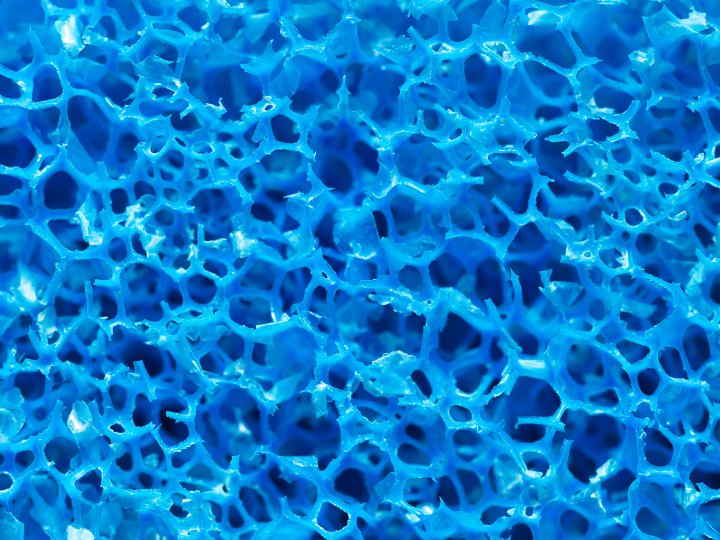
Mousse
Configurations de test (2)
