Khaled Tamim
A Thesis Submitted to the School of Graduate Studies, Khaled Tamim, BSc. (McMaster University) ,Published: August 2023
https://doi.org/10.71548/14162
Les titres, résumés et légendes des publications sont présentés en anglais.
Abstract
Silicones (or polysiloxanes) are polymers consisting of an Si-O repeating unit as the backbone of the polymer, and different organic functional groups along the backbone, most commonly two methyl groups. The Si-O bond gives many unique properties to the polymers such as incredible thermal and oxidative stability, low glass transition temperatures, and low surface tensions. These properties, among many others, make silicones unique compared to carbon-based polymers and are used in many applications such as in the automotive, cosmetic, construction and electronics industry. Most silicones
are used as thermosetting elastomers and cannot be recycled since thermosets cannot be melted or dissolved in solvents. Thus, they are landfilled once silicone products have met their use and are ready to be replaced. This is further worsened by the fact that most silicone elastomers are cured using metal catalysts such as platinum or tin, which are in very low abundance and typically toxic. Another means of crosslinking silicones must be
utilized to meet the sustainable demands of the future.
Non-covalent and covalent dynamic chemistry can offer another means of crosslinking silicones while still maintaining many of their desirable properties but adding the ability to be recycled by thermal reprocessing or specialized reagents. Catechol is an interesting molecule that can exhibit non-covalent and dynamic covalent chemistry and is the perfect candidate to replace metal-catalyzed crosslinking. A library of silicone elastomers is created by mixing catechol, closely related compounds, and amine-functional silicones with properties that are dependent on the ratios of phenol to amine ([ArOH]:[NH2]). Elastomers can be reprocessed by heat and can be dissolved by using simple amines, thus, reducing silicone and precious metal waste. Additionally, the silicone elastomers exhibit antioxidant activity that arises due to the radical quenching ability of the catechol. While catechol can introduce many new properties to silicone elastomers, it is toxic and hinders the sustainability profile and applications of the elastomers. Tannins are a unique class of polyphenolic compounds that are biologically derived and non-toxic, often being added to wine to help with colour and taste. Thus, commercially available tannins used in the winemaking industry are mixed with amine-functional silicones, and a set of materials is created by varying the mass loading of tannins. Up to 10% dilution of the silicone was possible while still retaining the flexibility that silicones are known for.
The materials created showed many of the same properties as the catechol crosslinked materials, including recyclability, dissolution, and antioxidant properties. The tannins also impart their properties, such as flame suppression, to the materials.
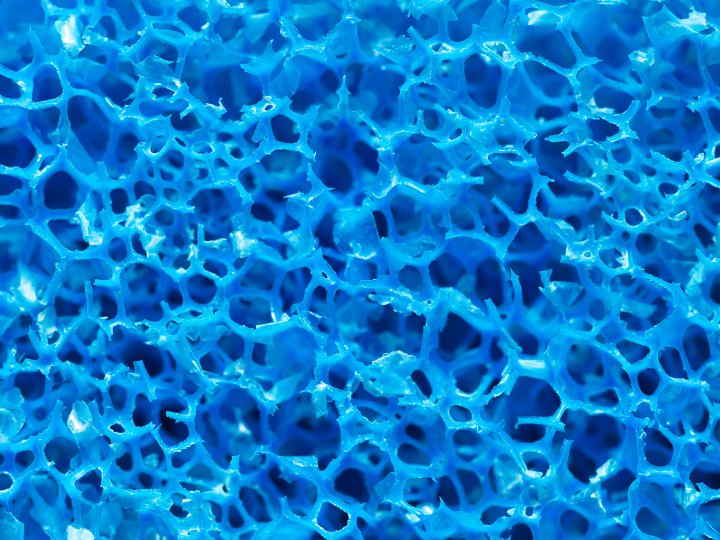
Young’s Moduli of Foams
Young’s modulus values were measured using a MACH-1 micromechanical testing instrument (Biomomentum Instruments) equipped with a 17 N multi-axis load cell and 0.5 mm hemispherical indenter using a Poisson ratio of 0.5 and a constant indentation depth of 1.0 mm with a 1 s dwell time; all measurements were conducted at 22 °C and obtained in triplicate measurements.
Utilisation des équipements
Dans cette thèse sur la réticulation d’élastomères de silicone par des composés phénoliques, le Mach-1 Mechanical Tester a mesuré le module de Young de mousses par indentation. Le montage décrit comportait un capteur de force multiaxial et un indenteur hémisphérique. Ces méthodes étayent la mesure du module par indentation, sans établir une indentation 3D suivant la normale locale à la surface ni des essais de traction avec cet appareil.
Article et documents
Document
Consulter l’article
Matériaux (2)

Matériau
Plastique et polymère (feuille)
Matériau
Mousse
Configurations de test (2)

Configuration de test
Tension

Configuration de test