Baixuan Yang; Ainara Irastorza Landa; Peter Heuberger; Heidi-Lynn Ploeg
World Congress of Biomechanics (WCB), 2022. Original structured conference abstract from the official Queen’s University laboratory site. Mach-1 role: rotary insertion into PU foam. Subsequent cyclic compression used Electroforce 5500.
Les titres, résumés et légendes des publications sont présentés en anglais.
Introduction Sufficient primary fixation of dental implants has been recommended for positive clinical outcomes , particularly in immediate loading protocols . Bone Implant motion (BIM) cannot be directly measured in vivo which limits the measurement accuracy; therefore, in vitro measurements are important especially for pre-clinical analyses to assess different implant designs [1]. Strain gauges and linear variable differential transducers are commonly used to measure the BIM for orthopedic implants such as femoral hip stem [2]. However, the small size of dental implants makes these common transducers difficult to implement. Therefore, the purpose of this study was to determine the implant motion (IM) and bone deformation (BD) using deflectometers for different dental implants under cyclic loading.
Methods Two implant systems: parallel-walled (Brånemark MkIII TiUnite NP 3.5 (BMK NP) and Brånemark MkIII TiUnite WP 5.0 (BMK WP), Nobel Biocare AB, Göteborg, Sweden ), and tapered implants (NobelActive® NP 3.5 (NA NP) and NobelActive RP 4.0 (NA RP)) were inserted into solid polyurethane (PU) foam blocks (40 × 40 × 8 mm, density 20 PCF, Sawbones, WA, USA) with constant angular velocity (12 rpm) , to depths equal to the implant body length, using a materials testing machine (MACH-1 V500CST, Biomomentum, QC, CAN). Vertical cyclic loading tests were performed two days after the insertion using Electroforce 5500 (TA instruments, MN, USA) with 5 repeats for each implant (Fig.1a). Five cycles of preconditioning ( -4 to -6 N) were applied to a hemisphere loading cup on the abutments, which were tightened with the clinical screws to the implants at nominal torque. Stepped-cyclic compressive loading of 35 N (mean) ±15 N (amplitude), 70±30 N, and 105±45 N was applied with a frequency of 0.5 Hz. Each step had twenty cycles. A custom-designed disc was attached to the implant and the IM was measured from the disc using a deflectometer (3540-001M-ST, Epsilon Technology Crop, WY, USA). Another deflectometer on the bone surrogate measured BD. The BIM was calculated as the difference between IM and BD. ANOVA with Tukey post hoc test was used to compare the IM and BD between the implants using IBM SPSS Statistics (IBM Corporation, USA) with significance at α= 0.05.
Results There was no significant difference in the BD (Table.1 and Fig1.c) between all implant systems. The IM and BIM for BMK NP w ere significantly larger than the others (Table.1, Fig 1.b and c). Both tapered implants had less IM compared to parallel-walled implants.
Discussion Under the tested lab conditions, the BD results suggested high reproducibility from the test method. Low micromotion for the tapered implant system may result from the interference fit due to the tapered body . Similar to other studies, the findings were : tapered implants provide adequate fixation to maximize the clinical outcomes, especially for immediate loading applications [3].
Utilisation des équipements
Un Mach-1 V500CST insérait les implants dentaires dans une mousse rigide de polyuréthane à 12 tr/min. La compression cyclique et les mesures de micromouvement suivantes utilisaient un Electroforce 5500. La catégorie Torsion désigne ici l’insertion rotative documentée.
Article et documents
Consulter le document (PDF)
Matériaux (1)
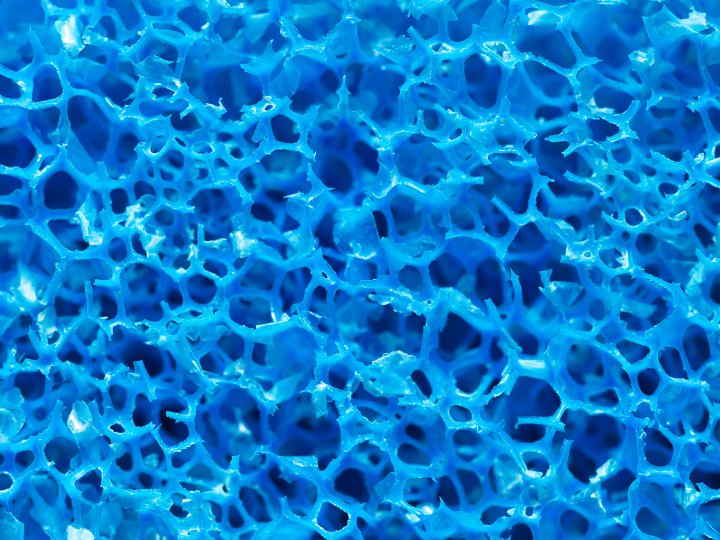
Mousse
Configurations de test (1)
