J. Soulhat; M. D. Buschmann; A. Shirazi-Adl
Journal of Biomechanical Engineering, Jun, 121(3), 340-347. (1999)
https://doi.org/10.1115/1.2798330
250 citations · 9 en 2025–2026
Les titres, résumés et légendes des publications sont présentés en anglais.
Cartilage mechanical function relies on a composite structure of a collagen fibrillar network entrapping a proteoglycan matrix. Previous biphasic or poroelastic models of this tissue, which have approximated its composite structure using a homogeneous solid phase, have experienced difficulties in describing measured material responses. Progress to date in resolving these difficulties has demonstrated that a constitutive low that is successful for one test geometry (confined compression) is not necessarily successful for another (unconfined compression). In this study, we hypothesize that an alternative fibril-reinforced composite biphasic representation of cartilage can predict measured material responses and explore this hypothesis by developing and solving analytically a fibril-reinforced biphasic model for the case of uniaxial unconfined compression with frictionless compressing platens. The fibrils were considered to provide stiffness in tension only. The lateral stiffening provided by the fibril network dramatically increased the frequency dependence of disk rigidity in dynamic sinusoidal compression and the magnitude of the stress relaxation transient, in qualitative agreement with previously published data. Fitting newly obtained experimental stress relaxation data to the composite model allowed extraction of mechanical parameters from these tests, such as the rigidity of the fibril network, in addition to the elastic constants and the hydraulic permeability of the remaining matrix. Model calculations further highlight a potentially important difference between homogeneous and fibril-reinforced composite models. In the latter type of model, the stresses carried by different constituents can be dissimilar, even in sign (compression versus tension) even though strains can be identical. Such behavior, resulting only from a structurally physiological description, could have consequences in the efforts to understand the mechanical signals that determine cellular and extracellular biological responses to mechanical loads in cartilage.
Utilisation des équipements
L’étude a développé un modèle biphasique du cartilage renforcé par des fibrilles pour la compression uniaxiale non confinée entre plateaux sans frottement. De nouvelles données de relaxation des contraintes ont été ajustées pour estimer la rigidité du réseau fibrillaire, les constantes élastiques de la matrice et sa perméabilité hydraulique. Le résumé disponible n’identifie pas l’équipement expérimental ni un rôle du Mach-1 Mechanical Tester.
Article et documents
Document
Consulter dans PubMed
Matériaux (10)

Matériau
Cartilage articulaire


Matériau
Hydrogel

Matériau
Cartilage articulaire (réparation)
Matériau
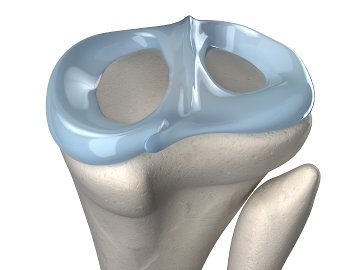
Ménisque


Matériau
Cartilage articulaire (TMJ)

Matériau
Disque (noyau pulpeux)

Matériau
Cartilage auriculaire
Matériau
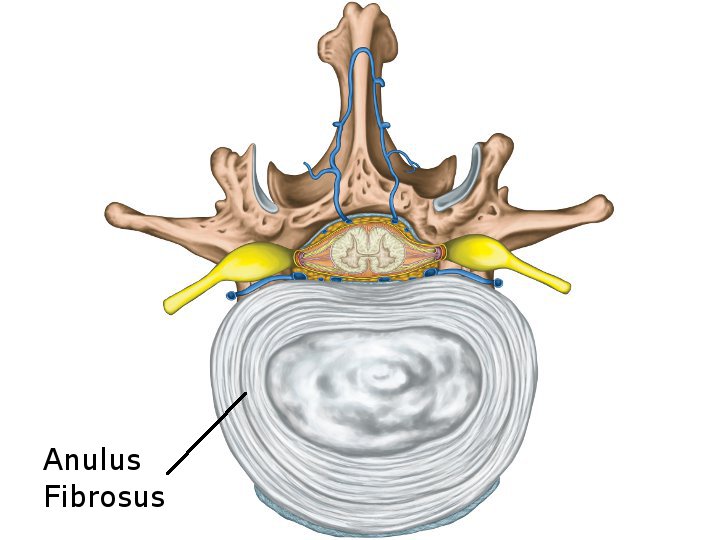
Disque (anneau fibreux)
Configurations de test (1)

Configuration de test
