
Test configurations
Shear

Shear tests can be used to evaluate the shear modulus G of a material in planar shear or in torsion. The shear modulus represents the stiffness of a material when a force is applied in a direction parallel to its movement while its base is kept still. The equilibrium shear modulus G is described as the shear stress over the shear strain. Two configurations are often used to determine the shear modulus: planar shear, which follows a horizontal axis (x or y axis), and torsional shear, which follows a rotational axis. Under the configuration of planar shear, the sample is assumed to be a perfect rectangular prism with one surface under stress and its opposite surface constrained. Under the configuration of torsional shear, the sample is assumed to be a perfect cylinder (moment of inertia correction can be applied for other shapes) with its top and bottom surfaces perfectly attached to both platens (non-slipping boundary condition).
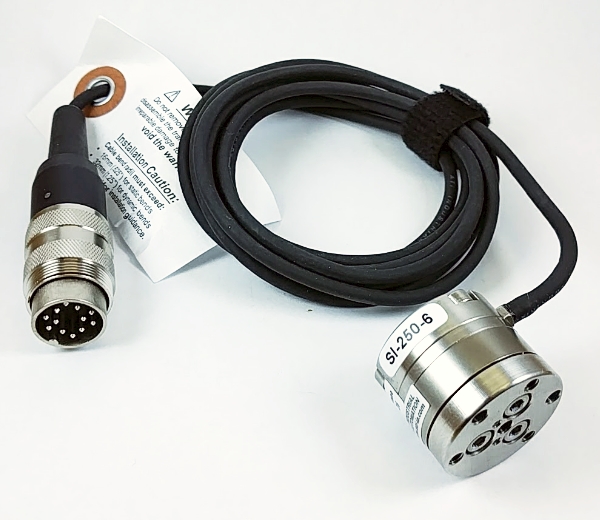
Recommended tester (1)
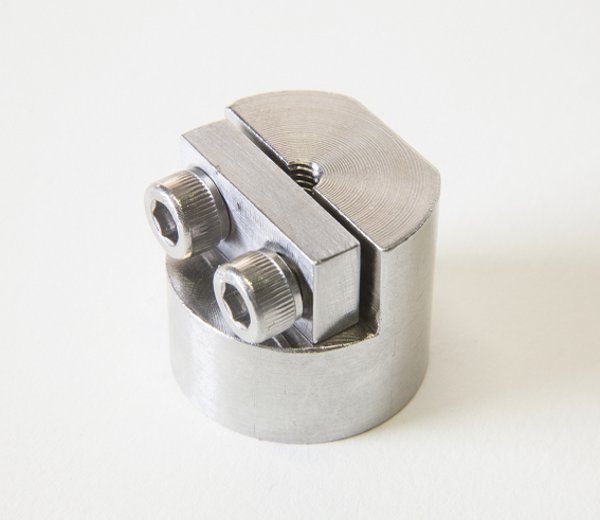
Accessories (7)



Case studies (1)

Related resources (3)
FAQ
What is the field of strain?
Measurement method allowing the display of a straining pattern of a material under deformation.
How does the "Sinusoid" model works?
This feature is used to obtain the Frequency, Amplitude and Offset of a sinusoidal signal. A blue line displays the theoretical sinusoid with the Frequency, Amplitude and Offset obtained (Figure 1). The values of the Frequency, Amplitude and Offset are indicated in the "Results" field. The units vary according to the graph’s axes.
This feature can also be used for sinusoidal stimulus-response analysis. Sinusoidal stimulus shall be selected on the x-axis and the sinusoidal response on the y-axis. The Modulus is the ratio of the response Amplitude over the stimulus Amplitude. The Phase is the phase difference between the response and the stimulus. The Modulus’ is computed as the Modulus*Cos(Phase) and the Modulus” is computed as the Modulus*Sin(Phase). A blue line displays the theoretical sinusoidal stimulus-response with the Frequency, Modulus and Phase obtained (Figure 2). The values of the Modulus and Phase are indicated in the “Results” field. The units vary according to the graph’s axes.
One use for this feature would be to compute material properties by multiplying the Modulus obtained by the appropriate geometric factors. For example, the Young’s Modulus can be obtained during uniaxial compression or tension on cylindrical sample with t/pi*r2 as the geometric factor, t is the thickness and r is the radius of the sample.
Mach-1 Analysis – Sinusoid – Example for stimulus-response analysis