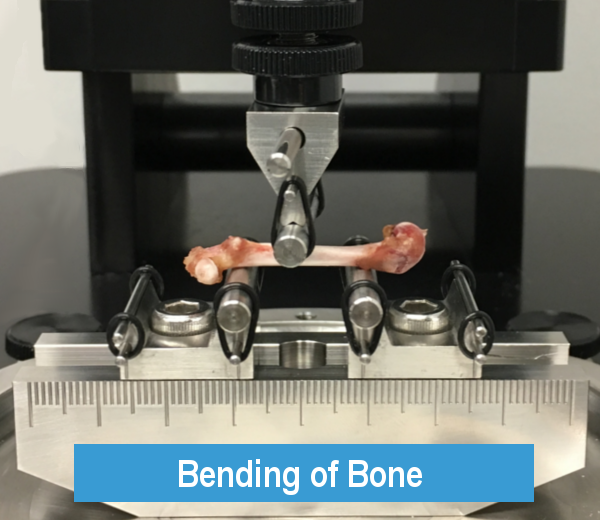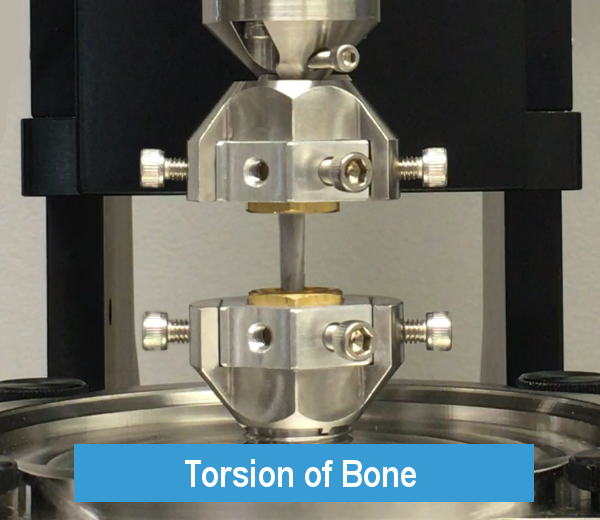


Torsion refers to the twisting of a sample due to an applied torque. This undergraduate biomechanics class laboratory module consists of assessing the mechanical properties of both wood stick and rat bone in torsion. Throughout this laboratory, each team will: prepare a dry bone sample; test sample in torsion with a controlled strain rate; extract data from torque-displacement curves to obtain samples’ rotational stiffness; obtain the shear modulus considering the sample geometry; if applicable, compare material’s behavior in torsion and to the results obtained in the Bending of Bone laboratory module (MA302).
Includes syllabus (instructor’s editable version) and sample preparation kit (e.g. 23 birch wood sticks, 46 nuts, 2 demo samples of wood stick embedded in acrylic) allowing about 10 repetitions (team of 2-5 students).
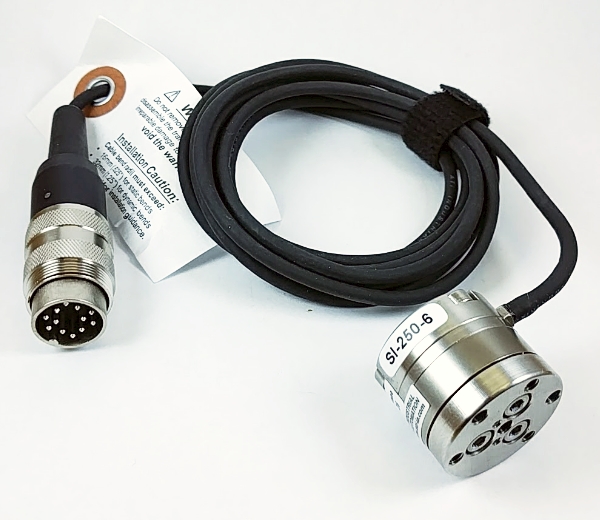
Requires a Mach-1 tester (MA005 or higher), a high capacity multiaxial load cell (MA236), a Torsion grip kit (MA096) and a testing chamber (MA626). Important : Resin such as Ortho-Jet Powder and Liquid (Lang Dental, USA) or any equivalent resin or cement must be purchased separately. Some formulations are classified as hazardous materials, always consult and follow the manufacturer’s Safety Data Sheet (SDS) for safe handling, storage, and disposal.
- Designed to be used in contact with physiological saline solution
- Deemed an excellent educational tool for students
- Learning Goal – Become familiar with the safe operation of a mechanical tester
- Learning Goal – Understand how the structure and composition of materials determine their mechanical behavior
- Learning Goal – Become familiar with the dissection of biological samples
- Learning Goal – Produce stress-stain curves considering the geometry of the sample
- Learning Goal – Extract mechanical parameters from stress-strain curves
- Learning Goal – Learn how to prepare and mount samples for torsion testing
- Learning Goal – Obtain shear modulus of circular section and tube section samples