
Caractérisation des propriétés mécaniques d'un gradient de dentine par cartographie d'indentation
(En anglais seulement) In this study, we evaluated the mechanical properties of a pre-cut tooth cross-section with a predetermined area of demineralization. Demineralization occurs in teeth due to acidic corrosion of crystals in the hard tissue by dietary acids or by organic acids produced as a biproduct of carious bacterial fermentation of available carbohydrates in the mouth. Here, demineralization of the dentin of a tooth was examined mechanically. The Mach-1 was able to successfully perform an indentation mapping of the target area in an automated fashion, using a spherical diamond indenter to test the local mechanical properties.
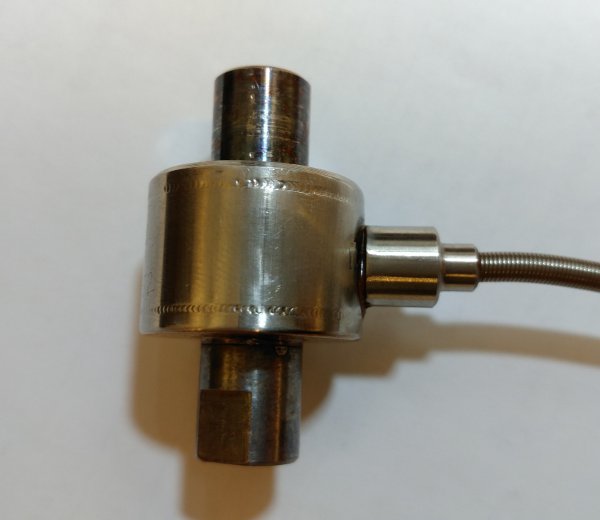
The sample was hydrated for one hour in distilled water with all bubbles removed from it before being fixed to a flat stainless-steel plate with cyanoacrylate adhesive. A load cell (MA999) with 150gf max load and a resolution of 0.0075gf was used to measure indentation force. A 50um diameter spherical diamond indenter with max indentation depth of 20um and a velocity of 1um/s was used to make the indentations into the tooth itself (MA674). The process of straight-line repositioning was automated using a 3-axis Mach-1 (v500css, MA006) with a vertical actuator resolution of 0.1um (MA175). The entire testing region was approximately 0.8mm long. After determination of start and end points using x and y coordinates, 20 evenly spaced indentation points were mapped in a straight line (40um apart). The max load (gf) at a 20um indentation depth was used to determine the dentin’s Young’s Modulus (using the Hayes / Hertz Model) and Hardness at each point. The data used to produce the Young’s Modulus graph was corrected for tester’s mechanical compliance. The loading profile of the testing consisted of finding the surface of the test point and then a trapezoidal indentation curve applied vertically into the sample. Due to the essentially horizontal orientation of the sample surface, use of the normal indentation function of the Mach-1 was not necessary and vertical indentations were performed. In fact, the sample’s surface angle with horizontal plane was also determined, wherein the sample was found to have a vary of 31um vertical over 0.797mm horizontal, which corresponds to only 2.2° angle.
An increasing gradient of max load was obtained across the indentations, demonstrating a steady increase in dentin hardness as the test points got further from the demineralized area. The Mach-1’s ability to perform high precision automated indentation mapping was proven by the results of this study, as was its ability to adjust for significant topography. The Mach-1 has a 10cm range of vertical motion while testing, while other comparable mechanical testers have significantly lower ranges and similar resolutions, meaning sample preparation and automated mapping are far more flexible using the Mach-1 without a loss of precision.
In future applications, the Mach-1 could be used to examine larger areas of caries in order to map physical properties and determine exactly how the demineralization progresses along the tooth’s cross-sectional surface, all while remaining autonomous in its mapping and able to adjust for topography changes. The ability to map large carious areas could enable more efficient determination of the effectiveness of different treatment protocols for demineralization as well as broadening research capabilities concerning the spread and mechanical characteristics of demineralized dentin.
Thanks to Professor Stefan Habelitz from University of California, San Francisco for providing the samples
Case Study prepared by Stefano Bambace, engineering intern at Biomomentum
Figures

Figure 1 — Afficher la légende
Échantillon de dentine placé sous l’indenteur pour la cartographie mécanique.

Figure 2 — Afficher la légende
Vue microscopique des empreintes d’indentation sur l’échantillon de dentine.

Figure 3 — Afficher la légende
Dureté mesurée à des positions successives le long du gradient de déminéralisation de la dentine.

Figure 4 — Afficher la légende
Module de Young mesuré à des positions successives le long du gradient de déminéralisation de la dentine.
Produits (1)
Accessoires (21)




Configurations de test (4)

Configuration de test
Cartographie 3D en indentation normale

Configuration de test
Indentation (Raideur)

Configuration de test
Indentation (dureté)

Configuration de test
Positionnement (XY Auto)
Matériaux (2)
Matériau
Dent

Matériau