Masoud Yeganegi
University of Toronto. Master of Applied Science and Engineering thesis. 2009.
0 citations · 0 en 2025–2026
Les titres, résumés et légendes des publications sont présentés en anglais.
The current study characterizes the mechanical and biodegradation properties of a polycarbonate polyurethane (PU) electrospun nanofiber scaffold intended for use in the growth of a tissue engineered annulus fibrosus (AF) intervertebral disc component. Both the tensile strength and initial modulus of aligned scaffolds were higher than those of random scaffolds and remained unaffected during a 4 week biodegradation study, suggesting a surface-mediated degradation mechanism. The resulting degradation products were non-toxic. Confined compressive mechanical force of 1kPa, was applied at 1Hz to in vitro bovine AF tissue grown on the scaffolds to investigate the influence of mechanical force on AF tissue production, which was found to decrease significantly at 72 hours relative to 24 hours, independent of any effects from mechanical forces. Overall, the consistent rate of PU degradation, along with mechanical properties comparable to those of native AF tissue, and the absence of cytotoxic effects, make this polymer suitable for further investigation for use in tissue-engineering the AF.
Utilisation des équipements
Un Mach-1 appliquait une compression cyclique confinée aux cellules bovines d’anneau fibreux cultivées sur des supports de polyuréthane électrofilé : 1 kPa à 1 Hz pendant une heure, par un cylindre d’agarose. Les propriétés en traction des supports étaient mesurées séparément avec un Instron 8501.
Article et documents
Consulter la source
Matériaux (2)

Plastique et polymère (feuille)
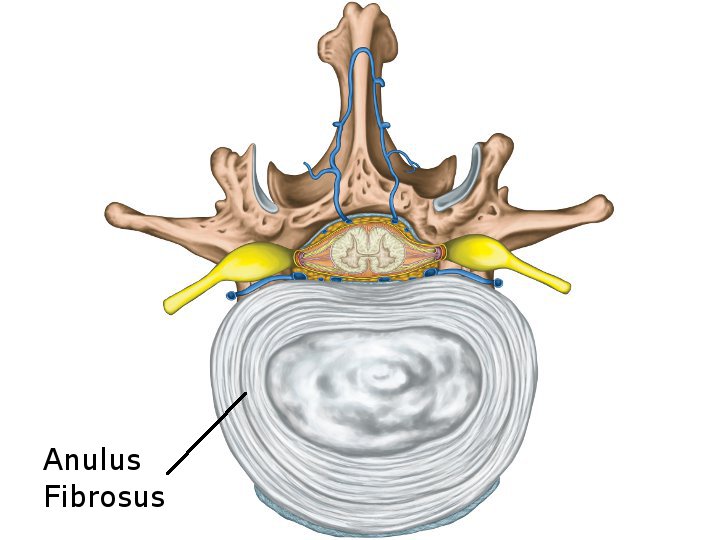
Disque (anneau fibreux)
Configurations de test (2)

Compression confinée
