Alice Berardo; Gianmarco Dolino; Damiano Coato; Paolo Gargiulo; Emanuele Luigi Carniel
Advanced Functional Materials (2026): e77047, published: 02 August 2026
https://doi.org/10.1002/adfm.77047
2 citations · 2 en 2025–2026
Les titres, résumés et légendes des publications sont présentés en anglais.
Abstract
Replicating the nonlinear, strain-dependent mechanics of soft biological tissues remains a central challenge in scaffold engineering, implantable devices and tissue-mimicking phantom development. Current approaches lack a systematic, experimentally validated framework that quantitatively links unit cell characteristics to macroscopic mechanical response across clinically relevant stiffness ranges. Here, we introduce a geometry-driven design strategy for 3D-printed adipose-inspired soft metamaterials, systematically varying unit cell diameter, shell thickness, orientation angle, and base material across multiple architectures. Compression experiments reveal that shell thickness governs initial stiffness and buckling onset, cell diameter controls the extent of the progressive instability plateau, and orientation angle switches the deformation mode from instability-driven buckling to progressive compaction. Finite element simulations capture these mechanisms quantitatively, while a multivariate regression model predicts effective modulus, buckling stress, and energy absorption (R2adj > 0.86). The resulting design space spans elastic moduli from units to hundreds of kPa, covering the mechanical ranges of multiple soft biological tissues, demonstrating that a single geometric framework can be systematically tuned to target diverse soft-tissue mechanical environments. This integrated experimental–computational–statistical platform establishes a mechanistic and geometry-driven design foundation that can inform the rational development of programmable soft metamaterials for regenerative scaffolds, tissue-mimicking phantoms, and soft implantable devices.
Utilisation des équipements
Le Mach-1 Mechanical Tester a servi aux essais de compression uniaxiale d’échafaudages en métamatériaux souples imprimés en 3D. Des cycles répétés de chargement–déchargement selon deux directions dans le plan évaluaient l’isotropie mécanique. Les courbes force–déplacement de plusieurs éprouvettes, cycles et directions ont été regroupées pour obtenir une courbe médiane de chargement permettant d’extraire les paramètres mécaniques de chaque configuration.
Matériaux (2)

Matériau par impression 3D
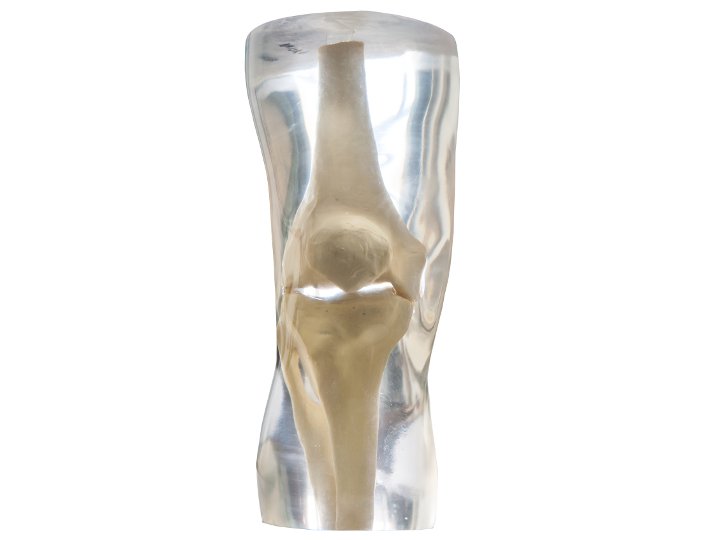
Tissus mous (fantôme)
Configurations de test (1)
