Adam Kositsky; Lauri Stenroth; Ervin Nippolainen; Jari Torniainen; Janne T.A. Mäkelä; Petri Paakkari; Tommi Paakkonen; Heikki Kröger; Juha Töyräs; Isaac O. Afara; Rami K. Korhonen
Journal of the Mechanical Behavior of Biomedical Materials, Volume 163, ISSN 1751-6161, Published: 2025
https://doi.org/10.1016/j.jmbbm.2024.106875
3 citations · 3 en 2025–2026
Les titres, résumés et légendes des publications sont présentés en anglais.
Abstract:
The human patellar tendon contains distinct fascicle bundles across its mediolateral and anteroposterior regions. Studies have suggested region-specific behaviour during in vivo actions, but it is unclear whether such regional differences result from localized variation in composition and mechanical properties within the tendon itself. Furthermore, the viscoelastic properties of any region of the human patellar tendon have not been well described previously. Here, a comprehensive investigation of the composition and material properties of six regions (three mediolateral × two anteroposterior) of the human patellar tendon was performed on tendons harvested from eight cadaver knees. Thorough viscoelastic (stress relaxation and sinusoidal) and elastic (failure) mechanical tests were conducted on dumbbell-shaped samples. Uronic acid (proteoglycan), hydroxyproline (collagen), and water contents were measured from the samples after mechanical testing. No systematic between-region differences were found for any measured biomechanical or biochemical parameter. However, the phase difference between stress and strain decreased as a function of increasing sinusoidal frequency (from 0.1 Hz to 5 Hz), suggesting the human patellar tendon behaves more elastically at higher strain rates. These results indicate the human patellar tendon is a homogenous material at its mid-substance and that other factors, such as geometrical constraints, enthesis properties, and insertion points, may be responsible for any region-specific behaviour in vivo. Additionally, the more elastic behaviour of the human patellar tendon as strain rate increases likely supports improved joint control and enhanced movement economy during fast actions such as sprinting.
Keywords:
Biomechanics; Composition; Orthopaedic; Regional; Soft tissue; Viscoelasticity.
Utilisation des équipements
Le Mach-1 Mechanical Tester a caractérisé le comportement viscoélastique en traction et la rupture d’échantillons de tendon patellaire humain en forme d’haltère. Des essais de relaxation des contraintes, de chargement sinusoïdal et de rupture comparaient les régions du tendon. Les échantillons, maintenus dans des mors avec leurs extrémités renforcées de papier abrasif, restaient immergés dans du PBS pendant les essais.
Matériaux (4)

Ligament et tendon

Ligament et tendon (réparation)

Ligament et tendon (artificiel)
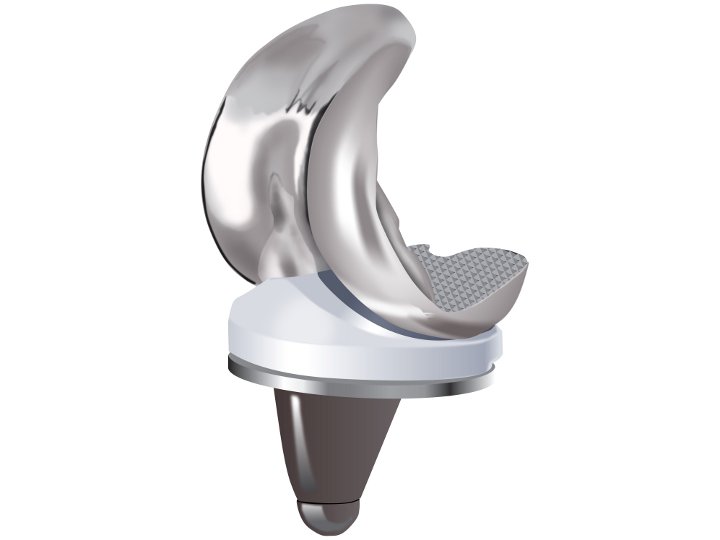
Prothèse (genou)
Configurations de test (1)
