Ryan Lang
Master of Science thesis, Bioengineering, Santa Clara University, June 2026.
Les titres, résumés et légendes des publications sont présentés en anglais.
Traditional bulk cavity microneedles suffer from stagnant zones and internal wall collisions that damage suspended cell carriers. This research computationally optimized and experimentally validated a novel multi-planar, branched hollow microneedle chamber to minimize dead volume and protect sensitive payloads. By replacing the traditional bulk cavity with a symmetric six-peripheral nozzle architecture, COMSOL simulations confirmed the elimination of central stagnation zones. Low fluid velocities (0.05 m/s) maintained streamline alignment, while higher velocities (0.32 m/s) induced wall impacts, a drift completely mitigated by high-viscosity fluids.
Arrays fabricated via SLA 3D printing demonstrated consistent cross-unit nozzle diameters, despite a 27.8% average print shrinkage. Payload extrusion was empirically validated using fluorescent alginate microcapsules, establishing a linear calibration range (R² = 0.9778) to dynamically track volume fractions, with internal payload retention limited to 10% to 20%. Biomechanical testing on tissue phantoms verified structural integrity for reliable puncture under a 7.8 ± 0.7 N peak force.
This novel design resolves historical flow imbalances and operates at shear-protective flow rates of 1.53 to 7.54 mL/min, substantially lower than the 12 mL/min literature standard. This gentle transport environment establishes a robust framework for advancing microencapsulated cell-based therapies, with future translational optimization required to align these workflows with clinical infusion rates that minimize patient discomfort.
Utilisation des équipements
Un MACH-1 de Biomomentum a testé des fantômes cutanés en alginate et des films eutectiques avec des microaiguilles fixées à un indenteur plat. Les essais de perforation à 0,1 mm/s mesuraient la force maximale de l’assemblage. La traction préalable à 0,25 mm/s caractérisait leur réponse élastique; le film B s’est désagrégé à l’installation.
Article et documents
Consulter la source
Matériaux (1)
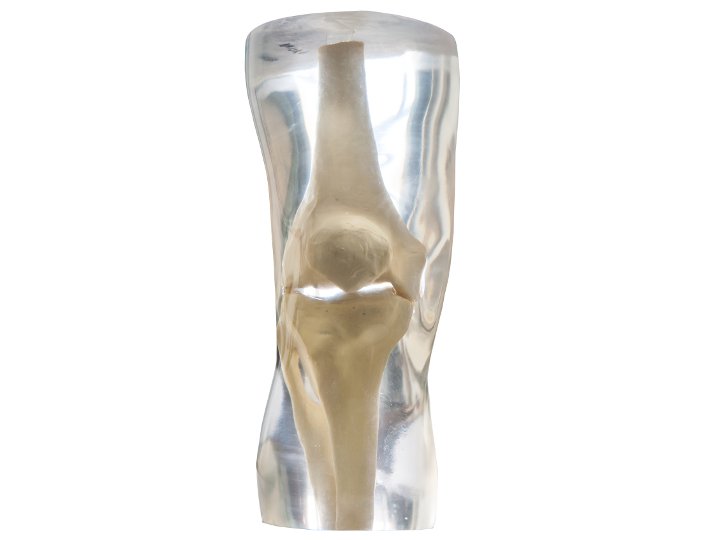
Tissus mous (fantôme)
Configurations de test (2)

Tension
