Yann Zimmermann; Tanvir Mustafy; Isabelle Villemure
Journal of Biomechanical Engineering. 2020;142(12):121001.
https://doi.org/10.1115/1.4047991
0 citations · 0 en 2025–2026
Les titres, résumés et légendes des publications sont présentés en anglais.
Abstract
Microcomputed tomography (micro-CT) based finite element models (FEM) are efficient tools to assess bone mechanical properties. Although they have been developed for different animal models, there is still a lack of data for growing rat long bone models. This study aimed at developing and calibrating voxel-based FEMs using micro-CT scans and experimental data. Twenty-four tibiae were extracted from rats aged 28, 56, and 84 days old (d.o.) (n=8/group), and their stiffness values were evaluated using three-point bending tests. Prior to testing, tibiae were scanned, reconstructed, and converted into FEM composed of heterogeneous bone properties based on pixel grayscales. Three element material laws (one per group) were calibrated using back-calculation process based on experimental bending data. Two additional specimens per group were used for model verification. The calibrated rigidity–density (E-p) relationships were different for each group: E28=10,320·p3.45ash; E56=43,620p·4.41ash; E84=20,090·p2.0ash. Obtained correlations between experimental and FEM stiffness values were 0.43, 0.10, and 0.66 with root-mean-square error (RMSE) of 14.4%, 17.4%, and 15.2% for 28, 56, and 84 d.o. groups, respectively. Prediction errors were less than 13.5% for 28 and 84 d.o. groups but reached 57.1% for the 56 d.o. group. Relationships between bone physical and mechanical properties were found to change during the growth, similarly to bending stiffness values, which increased with bone development. The reduced correlation observed for the 56 d.o. group may be related to the pubescent transition at that age group. These FE models will be useful for investigation of bone behavior in growing rats.
Keywords
voxel-based FEM, experimental FEM calibration, validated finite element analysis, rat tibiae, growth
Utilisation des équipements
La section de méthode mentionne un appareil Mach-1 et décrit des essais de flexion.
Les détails du protocole sont conservés en anglais dans cette rubrique; consulter la publication originale pour le contexte expérimental complet.
Article et documents
Consulter dans PubMed
Matériaux (1)
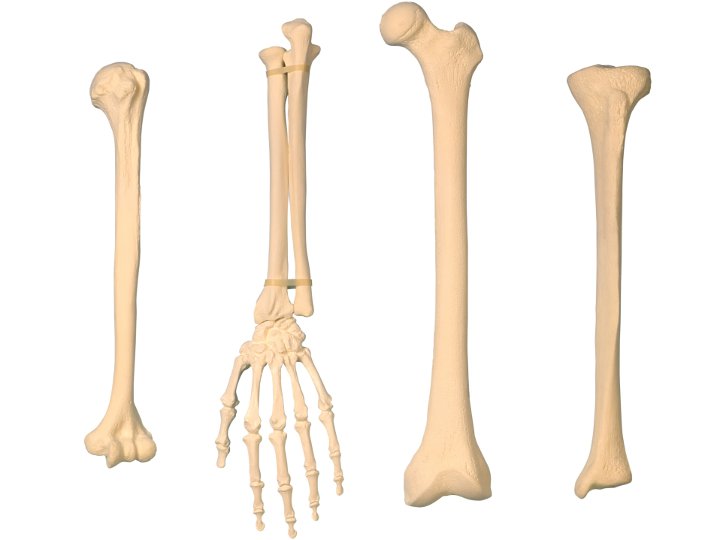
Os
Configurations de test (1)
