Iu J; Santerre JP; Kandel RA
Presentation #331.2 on Fri May 20 from 16:30 to 18:30 in room 511E during the World Congress on Biomechanics, Montreal, May 2016.
Les titres, résumés et légendes des publications sont présentés en anglais.
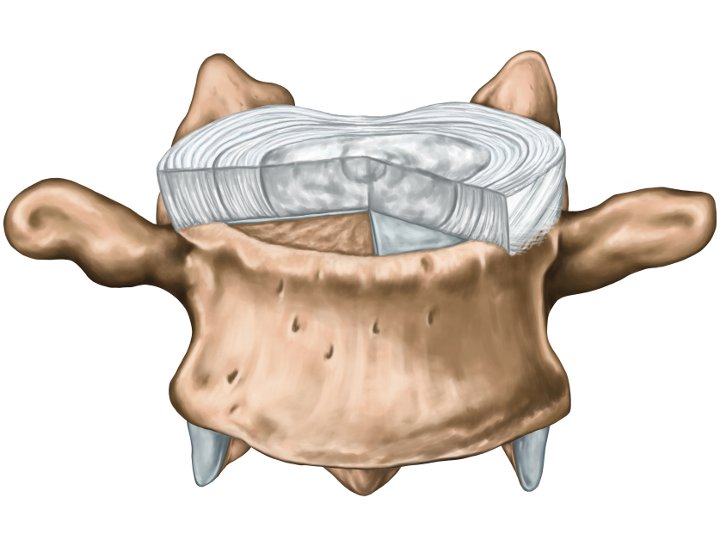
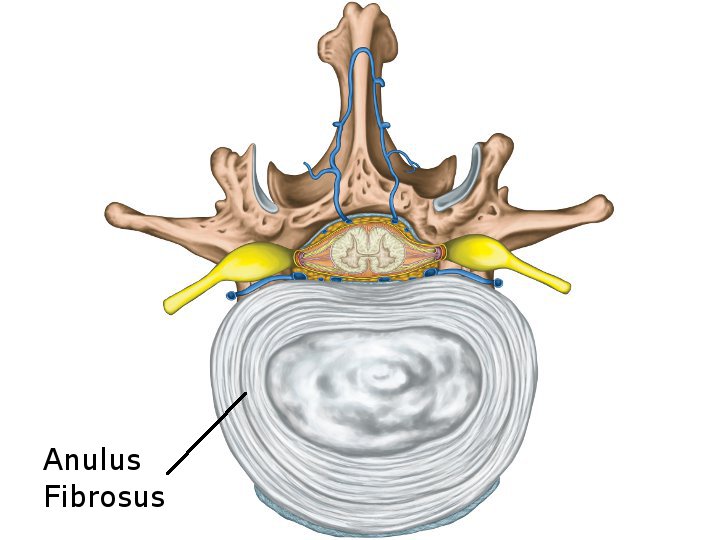
Introduction: Current treatments for chronic neck or low back pain are not optimal. The replacement of a degenerated intervertebral disc (IVD) with a bioengineered IVD has been investigated as a potential alternative approach. The IVD is composed of the central nucleus pulposus and a multilamellated annulus fibrosus. The annulus fibrosus is composed of outer annulus fibrosus (OAF) and inner annulus fibrosus (IAF) which differ in their composition. A protocol for the bioengineering the multilamellated annulus fibrosus tissues has been developed using elastomeric aligned nanofibrous polycarbonate urethane (PU-ADO) scaffolds. It has been previously shown that when these cells were cultured on a single layer of nanofibrous polycarbonate urethane (PU-ADO) membranes, they retain partially their differentiated phenotypes by accumulating different levels of extracellular matrix molecules. However, their differentiated phenotypes are lost when cultured as multilamellated OAF and IAF tissues. In this study, the application of radial strain by agarose under compressive loading onto the multilamtllated OAF and IAF tissues has been investigated to assess their effect in restoring their differentiated phenotypes.
Methods: Multilamellated constructs were generated by seeding 3 layers of PU-ADO scaffolds with OAF and IAF cells in spinner flasks and cultured with DMEM containing 10% FBS and ITS. After two weeks in culture, 4% agarose plugs were placed into the centre of the tissue and the agarose plugs were compressed at 0.85Hz at 4.4%, 8.8% and 13,2% strain (measured vertically) for 1800 cycles. The circumferential strain experienced by the tissues during the loading of agarose were assessed and the synthesis and retention of collagen and proteoglycans were assessed by radiolabelling of proline and sulphate.
Results and Discussion: OAF tissues increased the amount of accumulated collagen and total collagen synthesis by 50% during the 48 hours post loading when the agarose plug was loaded at 8.8% strain compared to unloaded controls. The total synthesis and accumulated of synthesized proteoglycan were also increased by 48% in OAF tissues when the agarose was strained at 8.8% compared to unloaded controls. However, IAF tissues did not respond to stimulation. Compression of agarose by 8,8% yielded 10.4% circumferential strain experienced by the OAF and IAF tisses. Only OAF tissues, but not IAF tissues, responded to the circumferetial strain when mechanically stimulated in vitro. This reflects that in our in virto cultured tissues, the characteristic of native OAF tissues, the role of which is to withstand tensile strains contributed by the radial expansion of the centrally located and heavily hydrated nucleus pulposis and IAF tissues, are still retained and could be used to improve the extracellular matrix content of OAF tissues. Alternative mechanical stimulation protocols will be further investigated to stimulate the protoglycan and collagen synthesis and accumulation by IAF tissues.
Conclusion: Circumferential strains experienced by OAF tissues cultured in vitro on multilamellated polycarbonate urethane constructs improved the synthesis and retention of collagen adn proteoglycans.
Utilisation des équipements
Des constructions multilamellaires d’anneau fibreux sur des échafaudages de polyuréthane à fibres alignées ont été stimulées mécaniquement par compression cyclique de plots d’agarose placés au centre. La déformation circonférentielle des tissus ainsi que la synthèse et la rétention du collagène et des protéoglycanes ont été évaluées. Le résumé disponible décrit le chargement, mais n’identifie pas l’appareil et n’établit aucun rôle du Mach-1 Mechanical Tester.
Article et documents
Document
Programme de conférence
Matériaux (3)

Configurations de test (1)

Configuration de test