Antonio E. Forte; Stefano Galvan; Francesco Manieri; Ferdinando Rodriguez y Baena; Daniele Dini
Materials & Design, 112, 227-238 (2016)
https://doi.org/10.1016/j.matdes.2016.09.063
117 citations · 17 in 2025–2026
Synthetic phantoms are valuable tools for training, research and development in traditional and computer aided surgery, but complex organs, such as the brain, are difficult to replicate. Here, we present the development of a new composite hydrogel capable of mimicking the mechanical response of brain tissue under loading. Our results demonstrate how the combination of two different hydrogels, whose synergistic interaction results in a highly tunable blend, produces a hybrid material that closely matches the strongly dynamic and non-linear response of brain tissue. The new synthetic material is inexpensive, simple to prepare, and its constitutive components are both widely available and biocompatible. Our investigation of the properties of this engineered tissue, using both small scale testing and life-sized brain phantoms, shows that it is suitable for reproducing the brain shift phenomenon and brain tissue response to indentation and palpation.
Equipment used
The Mach-1 Mechanical Tester characterized composite hydrogels developed as brain-tissue phantoms using compression and indentation measurements.
Article and documents
Document
View article (PDF)
Materials (2)

Material
Hydrogels
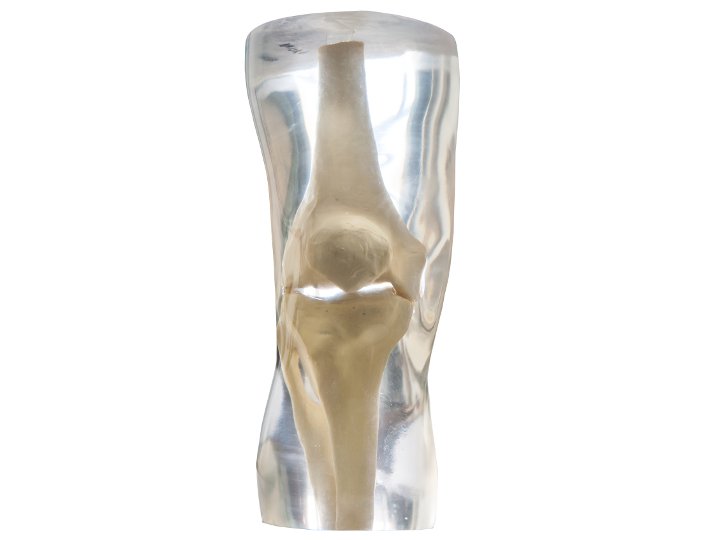
Material
Soft Tissue (Phantom)
Test configurations (2)

Test configuration
Unconfined Compression

Test configuration
