Cutting-edge synthetic brain developed for training budding brain surgeons
One of the most important roles of medical school is giving doctors hands-on training with the tissues they will work with over their career. No one wants to be their surgeon’s first time with a brain. But getting enough materials to train everyone can be expensive and ethically challenging, especially when it comes to the brain.
To get past this resource challenge, medical schools have tuned in to using synthetic brains to give students the feel of the real thing. But making a brain is hard, and most of these synthetics just don’t match the physical characteristics of real brains. For instance, a real brain responds differently to varying pressure levels and speeds of movement, but most training “brains” don’t display these nuances. These non-linear responses are key to giving a budding brain surgeon an authentic training experience, and the available materials can’t live up to the real thing. That’s why researchers Antonio E. Forte and Daniele Dini at Imperial College London set out to break the mold by creating a synthetic brain that accurately mimics the essential physical properties of the brain and can be cheaply and easily produced.
They turned to the Mach-1 mechanical tester from Biomomentum to test varying combinations of materials for essential brain-like properties like how they compress with varying pressure and speeds; the speed of recovery after injury; their response to shaking; and, of course, their response to incision. The Mach-1 was used to compare these essential surgical properties of the synthetic material combinations to pig brains, which have nearly identical properties to human brain. This fundamental research was published in the journal of Materials and Design.
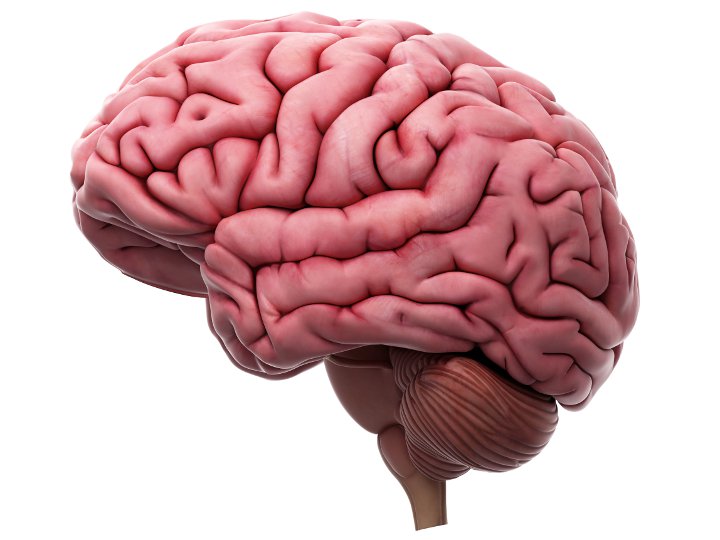
The researchers found that combining two gels, Polyvinyl Alcohol (PVA) and Phytagel (PHY), creates a material with very similar physical properties to human brain tissue. They created a life-size version of the brain that floats in cerebrospinal fluid, maintains all its brain-like properties, and could easily be used in a medical school. This innovation could provide drastically needed changes to medical school training, upping the talent level of novice brain surgeons worldwide.
Figures

Figure 1 — Show caption
Life-sized synthetic brain model developed as a tissue phantom.

Figure 2 — Show caption
Wire-cutting fixture mounted on the Mach-1 mechanical tester.

Figure 3 — Show caption
Cutting force versus displacement for brain tissue and the hydrogel model.

Figure 4 — Show caption
Stress-strain and relaxation responses comparing brain tissue with the hydrogel model at different test speeds.
Products (1)
Accessories (18)


Test configurations (2)

Test configuration
Indentation (Stiffness)

Test configuration