Alexander E.G. Baker; Hong Cui; Brian G. Ballios; Sonja Ing; Peng Yan; Joe Wolfer; Thomas Wright; Mickael Dang; Nicola Y. Gan; Michael J. Cooke; Arturo Ortín-Martínez; Valerie A. Wallace; Derek van der Kooy; Robert Devenyi; Molly S. Shoichet
Biomaterials, 2021, 120750, ISSN 0142-9612
https://doi.org/10.1016/j.biomaterials.2021.120750
83 citations · 39 en 2025–2026
Les titres, résumés et légendes des publications sont présentés en anglais.
Abstract
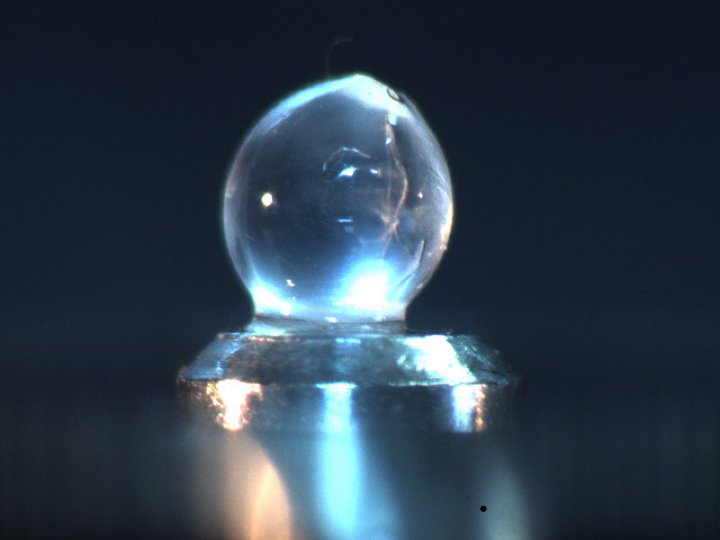
Vitreous substitutes are clinically used to maintain retinal apposition and preserve retinal function; yet the most used substitutes are gases and oils which have disadvantages including strict face-down positioning post-surgery and the need for subsequent surgical removal, respectively. We have engineered a vitreous substitute comprised of a novel hyaluronan-oxime crosslinked hydrogel. Hyaluronan, which is naturally abundant in the vitreous of the eye, is chemically modified to crosslink with poly(ethylene glycol)-tetraoxyamine via oxime chemistry to produce a vitreous substitute that has similar physical properties to the native vitreous including refractive index, density and transparency. The oxime hydrogel is cytocompatible in vitro with photoreceptors from mouse retinal explants and biocompatible in rabbit eyes as determined by histology of the inner nuclear layer and photoreceptors in the outer nuclear layer. The ocular pressure in the rabbit eyes was consistent over 56 d, demonstrating limited to no swelling. Our vitreous substitute was stable in vivo over 28 d after which it began to degrade, with approximately 50% loss by day 56. We confirmed that the implanted hydrogel did not impact retina function using electroretinography over 90 days versus eyes injected with balanced saline solution. This new oxime hydrogel provides a significant improvement over the status quo as a vitreous substitute.
Keywords: Hydrogel; Retinal Tamponade; Retinal Detachment; Vitreous Substitute; Hyaluronan
Utilisation des équipements
L’étude développe un hydrogel d’hyaluronane réticulé par des liaisons oxime comme substitut du vitré et évalue ses propriétés physiques et sa compatibilité oculaire. Le résumé disponible ne précise ni instrument ni protocole d’essai mécanique; le rôle du Mach-1 Mechanical Tester ne peut donc pas être vérifié.
Matériaux (1)
Matériau