J. Alejandra Amaya
A Thesis Submitted to the Faculty of Mississippi State University in Partial Fulfillment of the Requirements for the Degree of Master of Science in Biomedical Engineering in the Department of Agricultural and Biological Engineering, August 2026
Les titres, résumés et légendes des publications sont présentés en anglais.
Osteoarthritis (OA) is characterized by inflammation and degradation of articular cartilage, of which disease-modifying therapies are limited. Punicalagin (PUN), a polyphenol with cartilage-protective and anti-inflammatory properties, has inhibitory effects on matrix metalloproteinase-13 and pro-inflammatory cytokines. This study aims to optimize formulation of punicalagin-releasing in situ forming microparticles (PRISM) by varying polymer concentration, polymer ratio, solvent ratio, and oil-to-polymer ratio. Design of Experiment (DoE) software was used to generate 25 formulations. PRISM was created by emulsifying the polymer/drug solutions in sesame oil. Drug release data was measured via optical absorption readings and particle size determined by both scanning electron microscope (SEM) and dynamic light scattering (DLS). Significant effects were seen for burst release, late-stage release, and injectability, while interaction effects led to nonlinear system behavior, with polymer concentration being the most significant factor of influence. These results demonstrate that PRISM formulations are tunable to optimize sustained drug delivery for osteoarthritis treatment.
Utilisation des équipements
Le Mach-1 Mechanical Tester, avec une cellule de charge de 100 N, mesure la force d’expulsion des formulations polymères dans une seringue munie d’une aiguille de calibre 21. Les essais d’injectabilité utilisent les formulations sans punicalagine.
Article et documents
Consulter l’article
Matériaux (1)
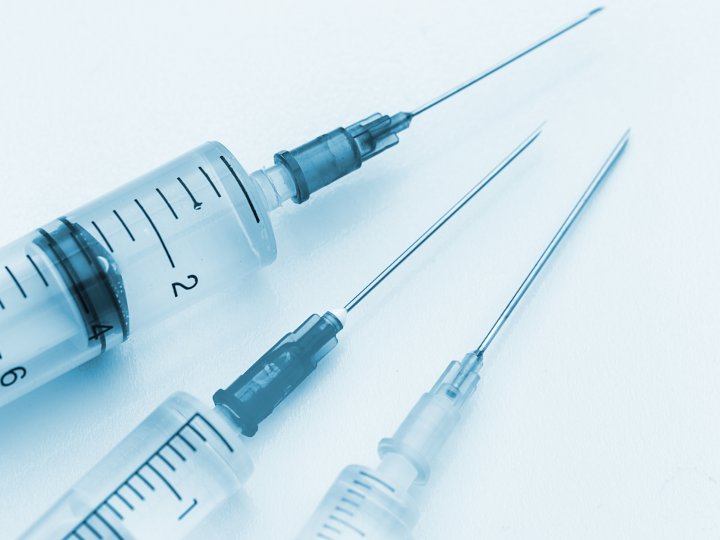
Seringue
Configurations de test (1)
