Michael Seidenstuecker; Luisa de Roy; Max F. Weiske; O. Piquet; Graciosa Quelhas Teixeira; Hermann O. Mayr; Bianca Riedel; Andreas M. Seitz
J Orthop Surg Res., PMCID: PMC12326754, PMID: 40770642, Published: 2025 Aug 6
https://doi.org/10.1186/s13018-025-06151-x
1 citation · 1 en 2025–2026
Les titres, résumés et légendes des publications sont présentés en anglais.
Abstract
The biomechanical properties of degenerated meniscal tissue are increasingly being studied in the context of osteoarthritis research. Spatial indentation testing using a multiaxial testing machine allows non-destructive characterization of viscoelastic properties. However, in vitro testing conditions can
significantly influence the results. The purpose of this round robin study was to evaluate the effects of different fixation methods and laboratory environments on the viscoelastic properties of degenerated lateral menisci. Spatial normal indentation tests were performed on nine degenerated human lateral menisci in two laboratories using a multiaxial testing machine. Key parameters, including the maximum applied force (Pmax), instantaneous modulus (IM), and elastic modulus (Et10), were analyzed across different meniscus regions. Significant differences in the IM, Et10, and Pmax were observed between the laboratories, highlighting the influence of testing conditions on biomechanical results. The results indicated that variations in fixation methods, environmental conditions, and freeze-thaw cycles significantly affect the elastic and viscoelastic properties of meniscal tissue. Unphysiological strains in the inner region of the menisci suggested that strain-controlled indentation may be preferable to distance-controlled testing. These results underscore the importance of standardizing in vitro conditions for meaningful comparisons with the existing literature.
Keywords:
Meniscus, osteoarthritis, mechanical examination, instantaneous modulus, elastic modulus, different fixation methods, sGAG, collagen.
Utilisation des équipements
Le Mach-1 Mechanical Tester a servi aux essais spatiaux de relaxation des contraintes par indentation de ménisques latéraux humains dégénérés dans deux laboratoires. Les mesures ont fourni la charge maximale, le module instantané et le module après 10 secondes de relaxation. L’exportation des cartographies a permis de répéter les essais aux mêmes points sous différentes conditions de fixation et de congélation–décongélation. L’épaisseur a été mesurée après le second essai en remplaçant l’indenteur par une aiguille.
Article et documents
Consulter l’article
Matériaux (1)
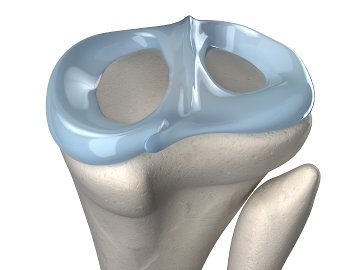
Ménisque
Configurations de test (4)

Cartographie 3D en indentation normale

Indentation (Raideur)
Relaxation des contraintes
