Ziad Abusara; Eng Kuan Moo; Ifaz Haider; Claire Timmermann; Sue Miller; Scott Timmermann; Walter Herzog
Ann Biomed Eng, Published: 19 January 2024
https://doi.org/10.1007/s10439-023-03437-1
4 citations · 3 en 2025–2026
Les titres, résumés et légendes des publications sont présentés en anglais.
Abstract
Many arthroscopic tools developed for knee joint assessment are contact-based, which is challenging for in vivo application in narrow joint spaces. Second harmonic generation (SHG) laser imaging is a non-invasive and non-contact method, thus presenting an attractive alternative. However, the association between SHG-based measures and cartilage quality has not been established systematically. Here, we investigated the feasibility of using image-based measures derived from SHG microscopy for objective evaluation of cartilage quality as assessed by mechanical testing. Human tibial plateaus harvested from nine patients were used. Cartilage mechanical properties were determined using indentation stiffness (Einst) and streaming potential-based quantitative parameters (QP). The correspondence of the cartilage electromechanical properties (Einst and QP) and the image-based measures derived from SHG imaging, tissue thickness and cell viability were evaluated using correlation and logistic regression analyses. The SHG-related parameters included the newly developed volumetric fraction of organised collagenous network (Φcol) and the coefficient of variation of the SHG intensity (CVSHG). We found that Φcol correlated strongly with Einst and QP (ρ = 0.97 and − 0.89, respectively). CVSHG also correlated, albeit weakly, with QP and Einst, (|ρ| = 0.52–0.58). Einst and Φcol were the most sensitive predictors of cartilage quality whereas CVSHG only showed moderate sensitivity. Cell viability and tissue thickness, often used as measures of cartilage health, predicted the cartilage quality poorly. We present a simple, objective, yet effective image-based approach for assessment of cartilage quality. Φcol correlated strongly with electromechanical properties of cartilage and could fuel the continuous development of SHG-based arthroscopy.
Keywords:
Multiphoton laser microscopy; Collagen network; Indentation stiffness; Streaming potential; Osteoarthritis; Knee joint & Bone-cartilage allografts.
Utilisation des équipements
Le cartilage de plateaux tibiaux humains a été évalué par sa rigidité en indentation et des paramètres quantitatifs fondés sur les potentiels d’écoulement, parallèlement à l’imagerie par génération de seconde harmonique. Le résumé disponible précise ces mesures, mais ni les appareils ni la trajectoire d’indentation. Il ne confirme pas l’utilisation du Mach-1 Mechanical Tester ou de l’Arthro-BST, ni une indentation normale 3D.
Matériaux (2)

Matériau
Cartilage articulaire
Matériau
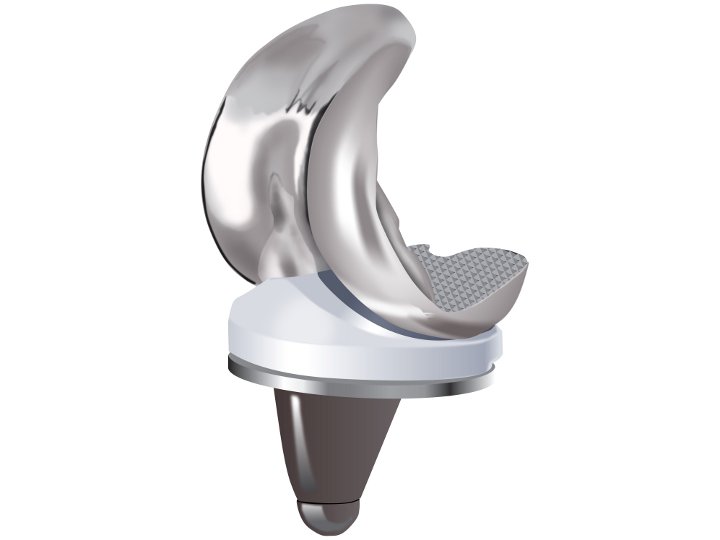
Prothèse (genou)
Configurations de test (3)

Configuration de test
Cartographie 3D en indentation normale

Configuration de test
Indentation (Raideur)

Configuration de test