Luisa de Roy; Zeynep Kara; Graciosa Quelhas Teixeira; Benjamin Mayer; Jonas Schwer; Martin Faschingbauer; Anita Ignatius; Andreas Martin Seitz
Frontiers in Bioengineering and Biotechnology. 2026;14:1973631. Published 5 November 2026.
https://doi.org/10.3389/fbioe.2026.1973631
0 citations · 0 en 2025–2026
Les titres, résumés et légendes des publications sont présentés en anglais.
Introduction
Despite extensive knowledge of how degeneration-related structural changes affect the compressive properties of the meniscus, the associated tribological changes remain poorly understood. Moreover, both functionalities have largely been investigated independently, leaving a knowledge gap regarding possible interrelationships. The aim of this study was to elucidate how alterations in meniscus biomechanical and structural properties affect the tissues tribological properties.
Methods
Human menisci with varying degrees of degeneration were collected from patients undergoing total knee replacement surgery. The compressive meniscus properties were determined using established indentation and compression tests, while the tribological properties were analyzed under simulated gait conditions. Macroscopic as well as microscopic degeneration was assessed by means of Pauli scoring and quantitative histology of glycosaminoglycan, collagen and proteoglycan-4 content. Statistically, linear mixed model analysis and Spearman correlation were applied.
Results
Higher macroscopic degeneration severity was associated with both increased friction (ρ = 0.30–0.32, p < 0.05) and reduced compressive stiffness (ρ = 0.30, p < 0.05). Increased friction coefficients were significantly associated with lower initial elastic properties (ρ = 0.30–0.42, p < 0.05) and higher viscoelastic relaxation behavior (ρ = 0.30–0.35, p < 0.05).
Discussion
Degenerative changes in the meniscus manifest themselves in a coupled tribological-functional impairment. The interaction between altered friction and compressive properties could represent a mutually reinforcing, degeneration-promoting feedback loop. To prevent a potential function-driven vicious cycle, disease modifying therapies may target the meniscus’ dual functionality in gonarthrosis progression.
Utilisation des équipements
Le Mach-1 v500css a mesuré les réponses en indentation-relaxation en trois points de chaque ménisque humain, avec un indenteur sphérique de 2 mm et une cellule multiaxiale de 70 N. Une indentation de 0,5 mm à 0,5 mm/s était maintenue pendant 10 minutes pour caractériser les propriétés instantanées et relaxées. La compression confinée et le frottement utilisaient des appareils distincts.
Matériaux (1)
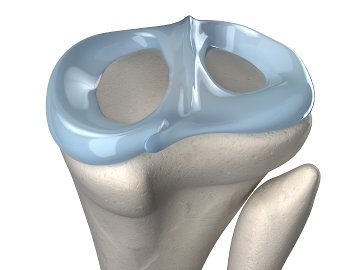
Ménisque
Configurations de test (2)

Cartographie 3D en indentation normale
Relaxation des contraintes
Produits (1)
