Xin Wang; Neng Xia; Chengfeng Pan; Bo Hao; Chaoyu Yang; Xinyu Wu; Tiantian Xu; Qingsong Xu; Li Zhang
Nature Communications. 2026;17(1):10568.
https://doi.org/10.1038/s41467-026-77391-6
0 citations · 0 in 2025–2026
Ejection dynamics can provide miniature robots with high-speed, cross-scale locomotion and non-contact operation. Here, we present a dynamic coupling ejection strategy for generating and transferring kinetic energy in miniature robotics. We demonstrate this strategy using a bilayer hydrogel catapult, in which rapid phase-transition-driven deformation couples dynamically with the projectile and the substrate, enabling substantial power output and kinetic energy release. The resulting ejection actuation system achieves a broadened projectile mass range (0-1000 times the catapult's body weight), a launch velocity of 16.6 m/s for a same-mass projectile, and a power density ( > 8.74×10⁴ W/kg) that surpassing most natural and engineered miniature catapults. As a proof of concept, we demonstrate a hydrogel catapult-driven biopsy robot that ejects a thick needle to acquire deep tissue samples in a single operation. These results establish a platform for advancing rapid motion and high-power output in miniature soft robotics.
Equipment used
Mach-1 tensile and adhesion-force measurements on hydrogel materials used in the catapult system.
Materials (1)
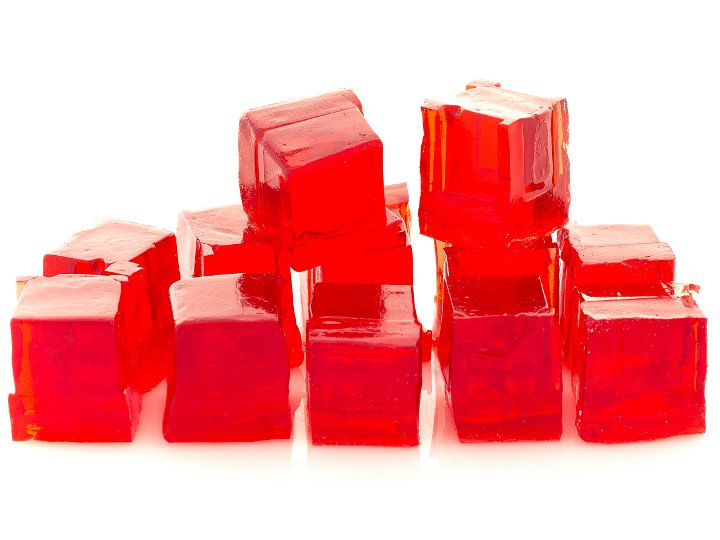
Hydrogels
Test configurations (1)
