Cryogenic 3D Printing of Super Soft Hydrogels
3D bioprinting has immensely grown in popularity over the past few decades. This technology has shown itself to be one of the leading methods of replicating organic tissue geometries such ones from the human body while retaining the ability to grow cells in these geometries. One issue that has arisen is the low stiffness of the biological tissues that are trying to be replicated. The bioinks used in the bioprinting technique cannot withstand their own weight if printed in a scaffold geometry.
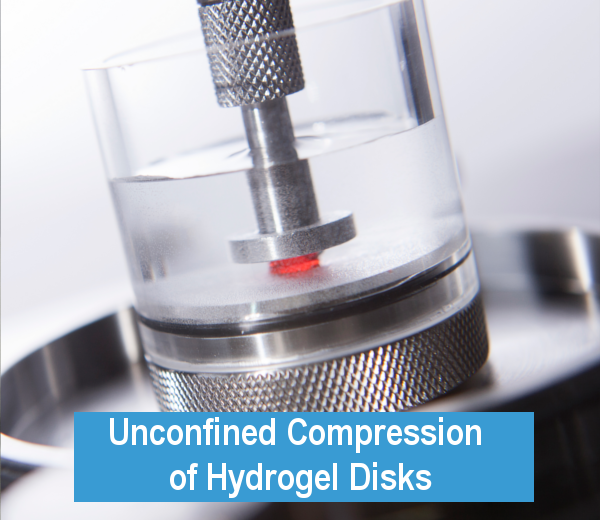
Researchers from Imperial College London recently attempted to study this issue by using a cryogenic 3D printing technique to create super soft hydrogel scaffolds. To be able to test the stiffness of these samples rapidly and accurately, the Biomomentum Mach-1 micromechanical tester was used. The scaffolds were able to successfully be tested in compression on the Mach-1 in 30 seconds, which allowed the researchers to rule out dehydration, a common cause of concern for these types of samples. A low force 1.5N load cell was used along with the Mach-1's high precision vertical resolution to be able to create stress-strain curves from the experimental data.
The researchers found that they were able to successfully mimic the softest tissues found in the human body such as brain and lung using this technique. As a validation method, they also compared their technique to the cast-moulded equivalent using the Mach-1. Due to the success of their technique, they were able to conclude that cryogenically 3D printed composite hydrogel structures could have a very wide range of applications, from soft tissue phantoms for surgical training and simulations to mechanobiology and tissue engineering.
Figures

Figure 1 — Show caption
Porous hydrogel structure, unit-cell geometry and examples produced by cryogenic 3D printing.

Figure 2 — Show caption
Stress-strain comparisons between printed or cast hydrogels and biological tissue reference data.

Figure 3 — Show caption
Schematic of the cryogenic printing apparatus, including the cooled printing bed and extrusion needle.
Products (1)
Accessories (11)


Test configurations (1)

Test configuration